
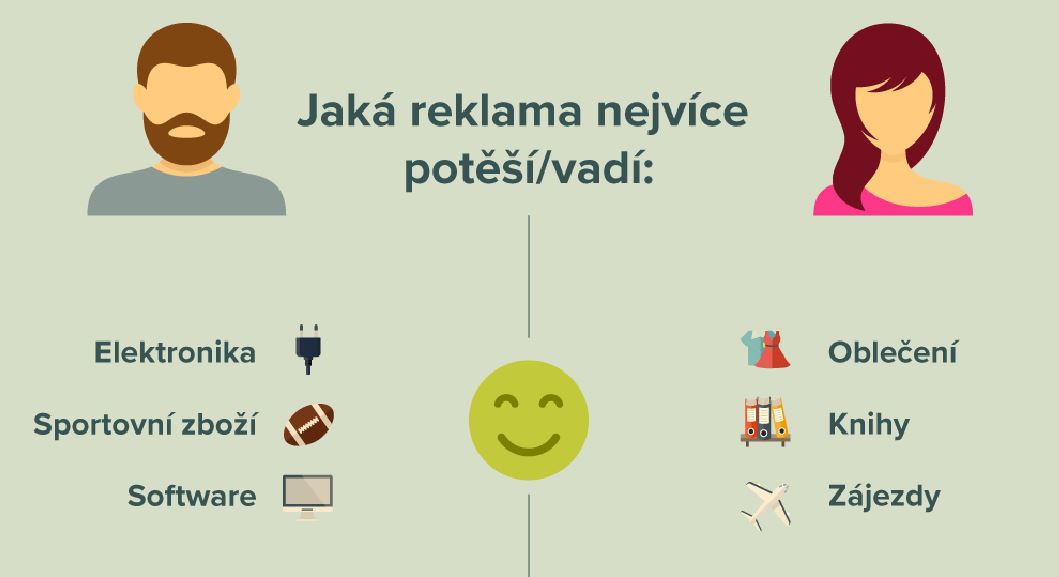
What kind of adverts do people view negatively?
Choose carefully which adverts you show your audience. And if you’re unsure, conduct your own research. You can use tools like Hotjar to set this up on your website, or simply ask in a newsletter, as we do. The priorities of women and men differ dramatically.
However, we don’t all dislike the same adverts. If you’re promoting alcohol and medicines, we have bad news for you. In the research, respondents rated such advertising very negatively.
You’ll find detailed figures in the infographic. We respond most positively to adverts for holidays, clothing and sports equipment.
Remarketing? Customers feel like prey
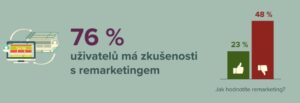
In the April edition of AITOMoviny, we asked about perceptions of remarketing. 76% of marketers who read AITOMoviny replied that they don’t mind remarketing. The irony is that almost half of users who have ever encountered remarketing do not appreciate this type of advertising.
Geolocation fares even worse. Only 20% of users appreciate this type of advertising. We might ask, why?
76% of respondents regularly encounter remarketing. Conversely, 23% of respondents in our survey have never seen geolocation advertising. If both types of advertising are set up properly, they can actually be of real help to users.
Perceptions of privacy play a certain role. We asked respondents in the survey whether they had already encountered this type of advertising on a computer or smartphone. We perceive mobile phones as much more personal devices. Even with a considerable degree of leniency, the figures aren’t looking too good. And we marketers should ask ourselves: why do we annoy people so much?
The answer is obvious: we’re simply being pushy.
Want to create useful adverts? Become your own hater
Every marketer thinks their products are the best ones to solve customers’ problems. Or they’re certainly paid to say so 😉
The first step is a healthy dose of self-criticism. We need to realise that modern consumerism is starting to annoy a whole host of customers, which is why alternatives such as zero-waste or organic products are so popular.
It’s good to start thinking critically about whether the customer really needs our products and when they want to hear about them. Big companies try to make the most of their advertising budgets. They often try to use up the entire budget and only then think about how to use it. At least in our experience. What does the user and potential customer get out of that?
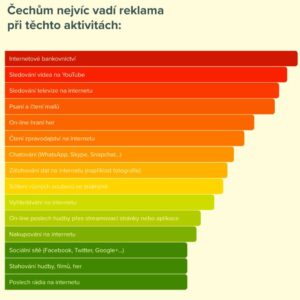
Ask yourself just as critically: if I show an advert now, won’t I annoy them? People don’t like it when adverts interrupt their favourite TV series or pop up in their emails. On the other hand, they’re more accepting of them on social media, when downloading content, or whilst listening to online radio.
The new marketing mantra: human-centred everything
If an advert is to be successful, it must break free from the marketing bubble. As soon as we stop worrying about budgets and start thinking about customers, we’ve won.
Become your customers’ best friend
. People often perceive PPC, various intrusive banners and pop-up windows as adverts. But few people perceive reviews
, product comparisons or blogs as advertising
.
This blog is undoubtedly our marketing tool, but we strive to create useful content
for you that will make your work easier. We think about how the data will help you or whether it will inspire you at all. And if we don’t find the data interesting either, we won’t burden you with it. Because everyone’s time is precious, so why waste it on trivialities.
We rarely choose entertaining data. After all, you’re reading our blog for work; we’re not publishing a comic strip. Before you create any advertising, ask yourself: “How exactly will this help someone
?” Only then should you ask whether it will make any money.
Advertising doesn’t have to be entertaining if it’s useful.
Few video adverts that play before a favourite song on YouTube are actually useful, which is why people use ad blockers. It’s their defence against marketing tedium. Consider that only 26% of people find what interests them thanks to adverts. That’s not a flattering percentage.
Read our tips on how to create meaningful adverts that nobody will block.