
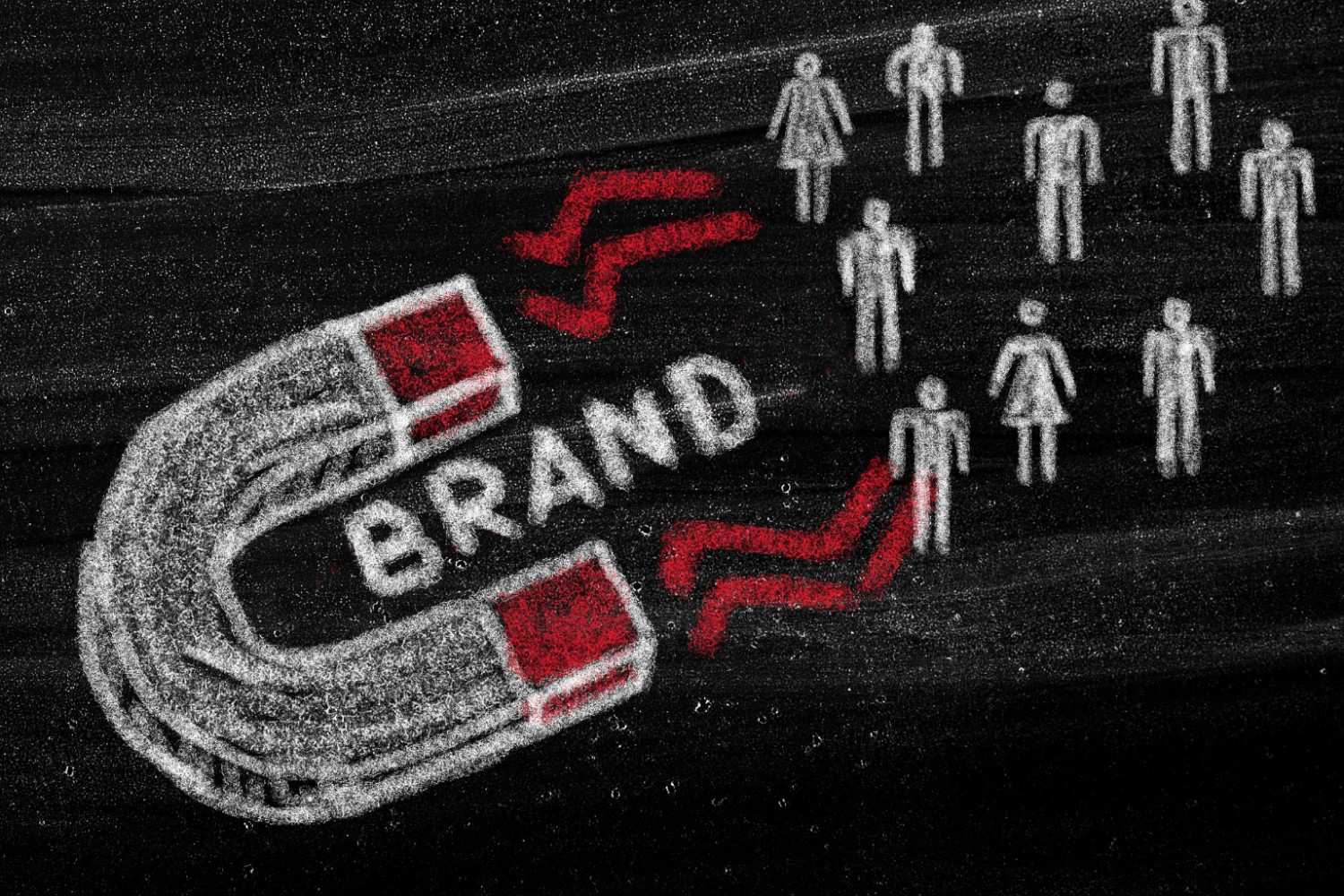
In B2B marketing, every customer is unique. Whilst personalisation in B2B typically focuses on the customer’s name and their most recent purchase, in B2B it must involve a deep understanding of the entire buying team, specific business challenges and the stage of the decision-making process. By 2026, personalisation will no longer be merely a nice-to-have, but a critical factor for conversion. Customers expect suppliers to understand them well enough to treat them as a single, strategic partner.
This article will focus on how to move beyond superficial personalisation and implement strategies that are data-driven, compliant with regulations, and effectively boost campaign performance and the sales cycle.
What is ‘deep personalisation’ and why will it be a necessity
Deep personalisation in B2B goes beyond segmentation by industry or company size. It involves delivering contextually relevant content and solutions to every key member of the purchasing committee in real time.
Key characteristics of deep personalisation:
- Role-Specific Messaging: A message for the CFO focuses on ROI and cost savings, a message for the CTO on security and integration, and a message for the Project Manager on ease of implementation and meeting deadlines.
- Buying Stage Mapping: Content varies depending on whether the account is in the early stage (ToFu – awareness of the problem), the middle stage (MoFu – considering solutions) or the late stage (BoFu – selecting a supplier).
- Account-Specific Insights: Communication includes specific references to recent events, acquisitions, financial results or technologies used within the target company.
Why is this a necessity in 2026? Sales cycles are long and buying teams are large. The average B2B purchasing team has 6–10 members. If your communication targets only one person, the risk of failing to close the deal increases dramatically. Deep personalisation ensures that all key stakeholders receive a message that is relevant to them and helps them justify the purchase internally.
How to personalise B2B communication without breaching GDPR/AI regulations
Growing privacy concerns and regulations (GDPR, EU AI Act) are forcing B2B companies to rely primarily on First-Party Data and to use AI with caution.
- First-Party Data as the Gold Standard: The key is to collect as much data as possible directly from the user (on-site behaviour after login, CRM data, preferences from forms, webinar data). This data is transparent and lawfully obtained, which minimises GDPR risk.
- Explicit Consent and Transparency: Every personalisation activity must be explainable. If you use AI for prediction, you must be able to explain which data led to a given recommendation.
- Anonymised Data for AI Training: When training AI models (e.g. predictive scoring), use aggregated and anonymised data to avoid the risk of bias and breaches of individual privacy (in accordance with the ethical requirements of AI regulations).
- Control Mechanisms: Implement mechanisms to prevent AI from generating discriminatory or inaccurate content, and ensure that a final human review before sending a personalised message is always included in the process.
Tip: Rely less on third-party data and more on enriching your own CRM data (e.g. using corporate databases that provide verified, publicly available information about the account).
ABM (Account-Based Marketing) 3.0 – the new generation of personalisation
ABM, i.e. targeting marketing efforts at pre-defined, high-value accounts, will move into the ABM 3.0 phase in 2026, driven by AI and hyper-personalisation.
The basic principles of ABM 3.0:
- Dynamic Account Prioritisation: AI constantly scans the market and data on existing clients and dynamically prioritises which Accounts are most ‘in-market’ (i.e. actively seeking solutions). This prevents wasting resources on ‘cold’ targets.
- Channel Orchestration: ABM 3.0 ensures that all interactions with an account (advertising, website, email, sales call) are perfectly synchronised. If the CEO visits a pricing page, a LinkedIn campaign for the CFO is automatically triggered and the sales representative receives a notification with a suggestion on what content to send.
- Personalised Buying Experience: It’s not just about personalising messages, but personalising the entire buying experience. This includes a dedicated virtual data room with content tailored specifically for that Account or a personalised section on the website (see below).
ABM 3.0 requires close, data-driven collaboration between marketing, sales and RevOps (Revenue Operations).
Predictive recommendation systems in B2B
Predictive systems, which are common in B2C (e.g. “Customers who bought X also viewed Y”), are becoming key in B2B as well.
- Content Recommendations Based on Behavioural Patterns: AI analyses the paths through the sales funnel taken by successful customers in a given vertical. Based on this, it recommends the next most relevant piece of content to the lead in real time (e.g. after reading an article on “Production Efficiency”, a case study on “20% Cost Savings” at a similar company is recommended).
- Next Best Action (For Salespeople): Salespeople no longer have to guess what to do next. AI suggests the next best step (Next Best Action) for each account: “Now is the best time to send this quote”, “Suggest a meeting about integration”.
- Churn and Up-sell Prediction (For Account Managers): As mentioned in the previous article, AI constantly monitors existing clients and predicts the likelihood of churn or their readiness to purchase another product or service (up-sell/cross-sell).
Predictive systems maximise the efficiency of both teams, as they direct resources towards actions with the highest probability of success (so-called Probabilistic Marketing).
Website personalisation: adaptive content, dynamic CTAs
Most B2B interactions begin on the website. By 2026, the website will serve as a dynamic digital salesperson that adapts instantly to the visitor.
- Adaptive Headlines and USPs: A visitor from the financial sector will see headlines and key selling points on the homepage focused on Regulation and Security. A visitor from a manufacturing company will see headlines focused on Optimisation and Supply Chains.
- Dynamic Call-to-Action (CTA):
The CTA changes according to the stage of the buying cycle.
- ToFu (First Visit): CTA “Download the E-book on Trends”.
- BoFu (Repeat visit, high score): CTA “Request a demo with a quote”.
- Customer (Logged in): CTA “Support for the new X module”.
- Geographic and Language Personalisation: It’s not just about language, but also references and local examples. A visitor from Germany will see German case studies and local references, even if they are viewing the website in English.
Adaptive web content is one of the most visible and quickest-to-implement pillars of deep personalisation.
Personalisation of sales presentations and offers
Once marketing hands over a qualified lead (SQL) to sales, personalisation must continue throughout the sales process.
- Generative AI for Presentation Drafts: Based on account data and previous interactions (chat, downloaded content, emails), AI can create an initial presentation draft that includes key arguments, relevant case studies and a focus on the most important points. The sales representative simply fine-tunes the details.
- Dynamic Price Quotes: Quotes are not static. They utilise dynamic fields from the CRM, which automatically incorporate the client’s specific requirements and optional modules recommended by AI based on predictive analysis. Price calculation becomes transparent and instantaneous.
- Personalised Video Add-ons: Sales representatives record short, personalised video introductions to the official proposal, addressing the purchasing team by name and summarising key points. This adds a human touch to an otherwise standardised document.
How to Measure Personalisation Performance
Measuring personalisation performance is crucial, as without it, it is merely an expensive experiment. Metrics must reflect improvements in efficiency and conversion.
- Conversion Rate Lift: Compare conversion rates (e.g. from MQL to SQL, or from visit to download) for personalised content versus generic content. Personalised content is expected to achieve higher conversion rates.
- Time-to-Close: Measure how quickly deals are closed with accounts that have been exposed to a high degree of personalisation. Effective personalisation should shorten the sales cycle.
- Cost Per Engaged Account (CPEA): Measure the cost of acquiring high-quality engagement from an account, not just a simple click. Here, personalisation is expected to have a higher CPEA than a mass campaign, but dramatically higher engagement quality.
- Lead Scoring Accuracy: Measure how accurately the AI model predicts which personalised leads will become paying customers.
Personalisation implementation model for a medium-sized business
A medium-sized B2B company does not need to start with massive CDP systems, but with an iterative implementation model.
Phase 1: Basic Data Hygiene (3–6 months)
- Objective: To consolidate first-party data.
- Steps: Integrate CRM (e.g. Pipedrive, HubSpot) with Marketing Automation and Google Analytics 4. Define key target personas and at least 5 key accounts for testing.
Phase 2: Pinpoint Personalisation (6–12 months)
- Objective: To implement personalisation with the greatest impact (Quick Wins).
- Steps:
- Deploy adaptive CTAs and headlines on the website for the most common verticals.
- Implement predictive lead scoring in the CRM (e.g. using HubSpot/Salesforce AI).
- Create 3–5 email sequences hyper-personalised for key personas and purchase stages.
Phase 3: ABM 3.0 Orchestration (12 months)
- Objective: To scale personalisation across channels and implement ABM.
- Steps:
- Launch a dedicated ABM campaign for 10–20 high-value accounts (LinkedIn advertising, personalised landing pages, direct mail).
- Implementation of Next Best Action recommendations for sales reps directly within the CRM.
- Regular audit of data bias and ethical compliance of generated content.
Deep personalisation in 2026 is not a luxury, but a necessary investment in efficiency and long-term relationships with B2B customers.