
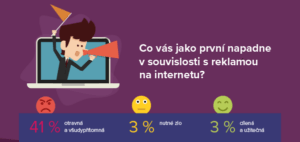
Have you ever wondered why people perceive adverts in this particular way? We have. We’ve been working in online advertising for over 10 years and conduct extensive user testing, so the research findings didn’t come as a huge surprise to us. We’d like to share the most interesting data with you, along with how to learn from it.
What doesn’t advertising do? Does it not encourage people to buy?
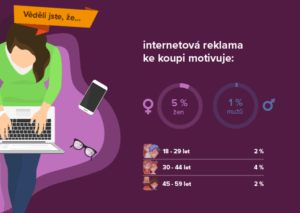
According to the results, advertising motivates only 5% of women and 1% of men to make a purchase. The reasons are clear – advertising on the Czech internet must always be labelled as an advertisement. Which is right; this way, no one can manipulate our perception. Understandably, however, this causes it to lose credibility.
Only 25% of users were alerted to something interesting by an advert. Moreover, these figures will fall further, as the GDPR will limit the possibilities for precise targeting. Specifically, it is expected that far fewer users will allow, for example, Google to profile them and target them according to their interests. Google will therefore lack data for targeting, and adverts will very likely become more expensive.
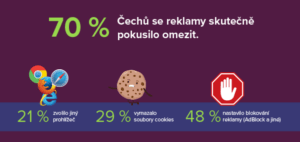
The vast majority of users would actually like to switch off adverts completely – a full 90%. A significant proportion also try to block adverts:
What should advertising do? Be useful
In our experience, users perceive PPC and commercial articles on the internet as advertising. But not, for example, bloggers’ reviews, your own blog or a standard Facebook post. Why is this the case?
It’s because this information has added value. Few people get annoyed by a sponsored post on Facebook such as ‘how to fill in your tax return in 2018’. Such advertising provides something we need. Objectively speaking, we need advice on this. It’s not just a garish banner with a discount.
Advertising doesn’t necessarily have to be entertaining. I don’t enjoy reading about how to choose a mortgage, but it’s invaluable information for me if it’s written in a way that actually helps me. For years, we’ve been seeing a clear shift towards human-centred marketing. What does that mean now?
The GDPR is the biggest opportunity for marketers since the advent of the internet
It will put a stop to annoying adverts. Without consent, you won’t be able to spam people with emails or bombard them with remarketing banners. These tools will be expensive, and many companies won’t want to invest in them.
Because of GDPR, other types of advertising will come to the fore, and for these, we’ll need to find meaningful content. Can you believe we’re talking about content again? It’s just the next logical step, because as we all know, content is king.
User-focused marketing will stand out more. That is, marketing that helps users solve their problems. Marketers will stop focusing so much on the SEE stages of the buying journey, and instead focus on THINK, DO and CARE.
In the THINK phase, users are interested in how to make a choice; they want to read a review or even try out the product you’re offering. This is exactly what useful advertising looks like – it responds to practical problems and needs.
5 rules for advertising post-GDPR?
1. Be brutally critical of yourself
Think twice about whether a particular advertising format will actually help your customers. If not, don’t spend money on that ad.
2. Put the customer first
Put yourself in your customers’ shoes, think about what’s bothering them, and how you could help them. And don’t be afraid to help them for free. Take a look, for example, at the lawyers at e-legal.cz; they offer free downloadable contract templates online. Is this marketing? YES, initiatives like this build a brand. Believe me, these people have their hands full even though some of their know-how is publicly available online.
3. Focus on brand building
Build your brand and its influence. Talk to customers, create solutions for them. Performance-based campaigns will struggle, whilst those focused on branding will likely retain their place in the sun.
4. Don’t spread yourself too thin
Become a guide to the purchasing process. Don’t offer a hotchpotch of everything. Instead, help the customer make a decision, even if they end up choosing a competitor.
5. Focus on content
Do marketing that doesn’t look like marketing. Focus on building online PR, write your own blog and collaborate with bloggers. It’s always worked and it always will.
Is GDPR giving you headaches? Don’t worry. We’re preparing a checklist for you on what to watch out for online. Our advice is: do you handle personal data properly and in accordance with the current Act No. 101/2002 Coll.? Then you probably won’t have any problems!