
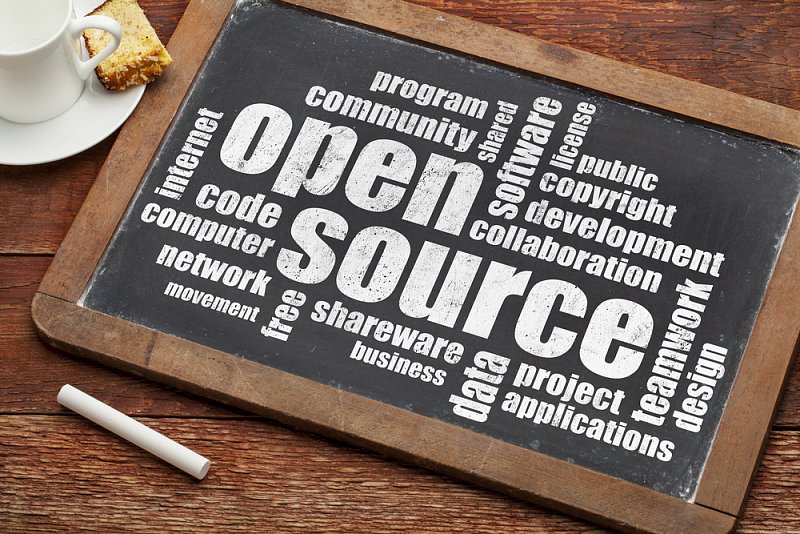
Open source is…
software with open source code, which is usually developed within a global community. Classic examples of open source for websites include content management systems such as WordPress, Drupal, Joomla and Magento. The openness of open source is determined by its legal availability under a licence that allows users to view and modify the source code, e.g. the GPL licence, etc.
What are the benefits of an open-source system?
The advantage of this CMS (content management system) is that it is free and licensed. Its code can be legally modified under the terms of the licence. Getting open source up and running doesn’t take hours; all it takes is a few clicks and downloading a template. The system is also portable, and the global community of programmers is constantly striving to improve it.
The major drawbacks of open source
And now we come to the long list of problems associated with deploying open source. A major drawback of open source is the fact that whilst any bugs that subsequently appear in the system are fixed in the new version, they are widely known due to the openness of the code and are therefore easily exploited by hackers.
Given that many websites are built on open source systems, it pays off for spammers to create automated bots (spambots) that repeatedly attempt to automatically breach a large number of such websites.
Clients are often dissatisfied with the features and appearance of open-source software and request specific customisations to suit the objectives of their online business. However, if these customisations are carried out by non-specialists, this leads to the problem of limited update options. Not every webmaster is capable of modifying or creating a system-compliant module that allows for updates. They will have to maintain such a module in the future – adapting it to new standards and the hosting system’s API. And those who can do so will charge a fortune for it.
Use more secure content management systems
At AITOM, we work with the AitomCMS 3 content management system, which we developed ourselves. Many of our clients use it, and it has been tried and tested on hundreds of projects. With a custom-developed content management system like this, there is no risk of attack; we know the source code inside out, carry out regular system updates, and are able to develop any functionality according to the client’s needs. Furthermore, the AitomCMS 3 content management system is written in PHP, the most widely used programming language, making it easily portable. If a client chooses our content management system, we provide them with the fully completed source code, with every line of code commented, so the client can easily navigate it. We are currently finalising the development of the new AitomCMS 5 content management system, which will offer new features and modules.
When you decide to set up a website or an e-shop, first consider which content management system you will base your website on. Do you really have enough time and money to combat the obsolescence of the content management system and ward off potential threats?