
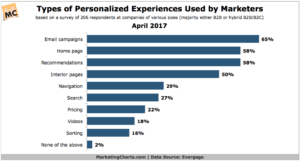
According to research, the most commonly personalised elements are emails (65%), website homepages and recommendations (both 58%); in half of cases, internal pages are also optimised.
How does personalisation work?
Technically, personalisation works on the basis of cookies. Cookies remember what interests you on the website and subsequently display this to you as a priority. The use case is clear – personalisation is of interest to e-shops and, generally, services that can be purchased online frequently – from online TV and various discount portals to betting sites, where you will see odds primarily for your favourite sports. However, if a user disables cookies, personalisation will not work for them.
Research from late last year proves that personalisation works. It brought significant improvements in conversion rates across SEO, email and social media. Compared to 2014, there has been a dramatic increase in conversions.
When does personalisation make sense?
Within an e-shop, it makes sense to offer personalised up-sell and cross-sell offers; during repeat visits, the user can be shown a product they were interested in previously. This works very well on rohlik.cz, for example. When you finish your purchase, the system reminds you of the groceries you bought and whether you’ve forgotten anything. In this very unobtrusive way, the shop increases its sales.
Personalising the homepage is particularly important for more expensive products, as users tend to think more carefully about purchasing them. It is beneficial for an e-shop to display products the customer has previously viewed during their next visit, thereby making the purchase easier. Similarly, personalisation can be used effectively when purchasing products that take a long time to choose (such as holidays).
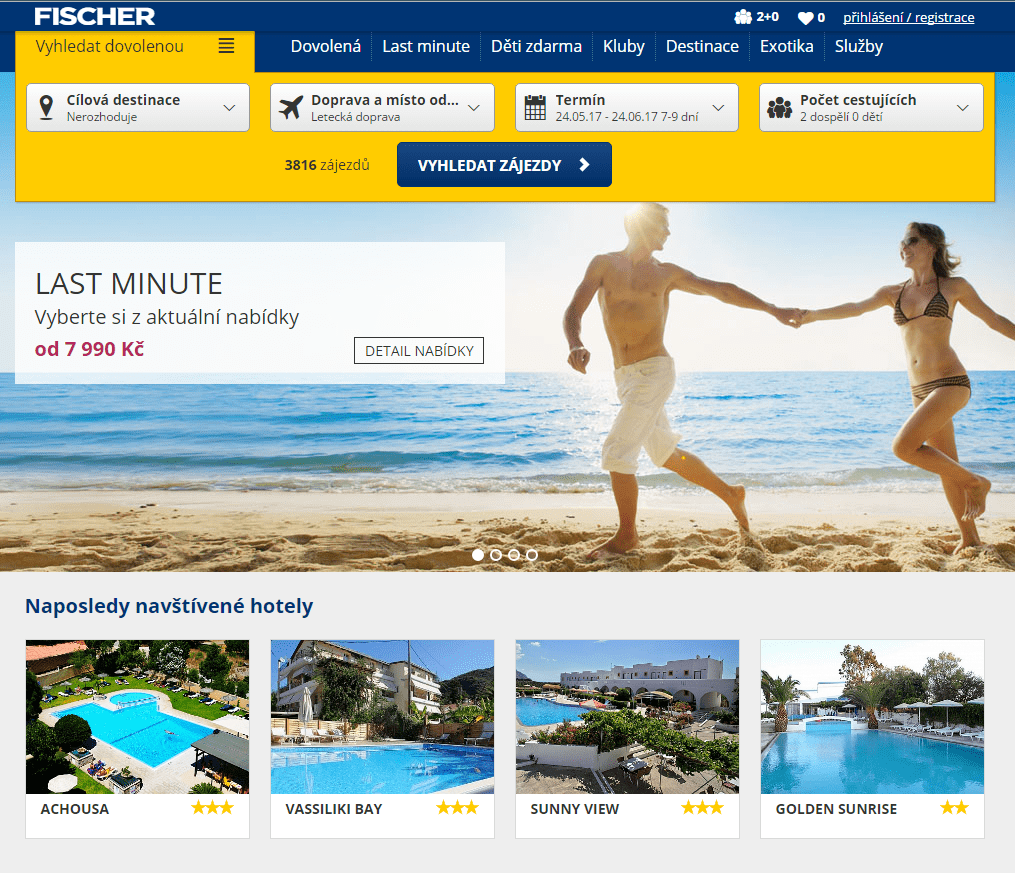
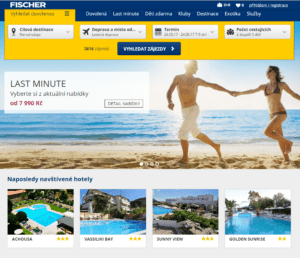
You can try out personalisation when choosing a holiday on the CK Fischer website. Based on your selection, the site recommends hotels with a specific number of stars and destinations. We searched for 3-star hotels in Greece – the website is still recommending exactly those to us several days after our visit.
Personalisation on an e-shop can be based on price, brand, product type – practically any parameter the customer can select. It is also possible to send targeted reminders, for example when a customer is expected to have run out of a product. This principle must be set up differently for every type of product in e-commerce: for a pharmacy, we can set up a reminder for a repeat purchase; for example, if a customer buys joint supplements for 3 months, we’ll send them an email 80 days later to order them again.
Why personalisation isn’t implemented
Personalisation is brilliant from a business strategy and marketing perspective, but it brings with it a whole host of technical problems. For example, many companies have more than one e-shop. A major problem is therefore the diversity of systems and products. For personalisation to work, a perfect XML feed is essential. This feed connects to the personalisation system. We cannot apply the same personalisation logic to every e-shop, not least because of the differing product ranges.
Most companies are also concerned about the high initial investment. In reality, personalisation systems cost in the tens of thousands of crowns.
“And we’re only talking about e-shops here. Personalising websites and their content is challenging, as research among marketers also confirms,” says Head of Development Tomáš Odl.
In practice, we often find that companies do not have the data available to enable even partial personalisation. Without data, it is practically impossible to set personalisation variables. At AITOM, we have personalised a website in one instance; the personalised content is displayed once the user logs in. For other clients, the ratio between investment and potential profit wasn’t attractive enough.
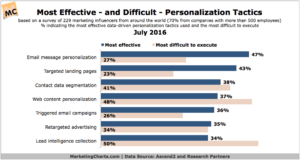
Personalisation options
Theoretically, we could divide personalisation into ‘dumb’ and ‘smart’. Imagine ‘dumb’ personalisation as recommending random products from the same category to customers on an e-shop as ‘similar items’.
‘Smart’ personalisation
is that which makes sense and offers added value. You offer the user the same brand of product, in a similar quality and price range, and so on, as ‘similar items’.
Today, there are professional programmes
(such as Persoo
) that handle personalisation. Suppliers then simply integrate them into an e-shop or website. These software tools track users whilst also reflecting our preferences; for example, they prioritise products with higher margins as part of upselling.
When does personalisation make sense
In practice, it doesn’t make sense to personalise every website. For most of our clients, website personalisation is a waste of money. Personalisation alone would probably not generate a profit for them.
Use common sense. It only makes sense to personalise sites where users can shop frequently and repeatedly – for example, Alza, thanks to its wide range of products, online supermarkets, or pet shops.
Instead, invest your time in personalising your communication with customers. Spend time personalising newsletters and improving the targeting of adverts and social media posts