What are cookies?
Cookies are small text files that collect information. They are used by Google Analytics and AdWords. They are used to personalise content. Websites that have not implemented a cookie banner face a heavy fine.
What do cookies look like?
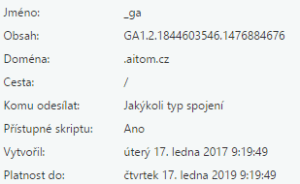
This is the data that Google Analytics collects on Aitom.cz – it assigns you a random number and uses this number to track which pages you have visited. However, it does not store personal information such as your name or email address.
An annoying banner or better data protection
Generally speaking, users were not impressed by the cookie banner.
“Last year, we carried out several user tests on websites with the cookie banner. Older users over 40 were confused by it or found it downright annoying, whilst younger users automatically clicked ‘accept’ and paid no attention to the banner’s wording,” says Michal Vaníček, Head of Marketing at the AITOM agency, commenting on the impact on users.
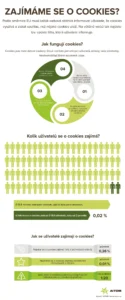
This is also confirmed by data from other AITOM clients for 2016. The agency analysed data from 13.5 million page views; only 3,100 of these users viewed the detailed information about the cookie banner, representing just 2.3 per mille of users.
However, those who opened the page with detailed information also read it. Users spend an average of 1 minute and 20 seconds on the page about the handling of cookie data, which is enough time to study the entire content.
The future of cookies
Cookie banners have not proved effective; it now looks as though they will be a thing of the past from 2018 onwards
. The EU wants to shift responsibility for data protection to browsers
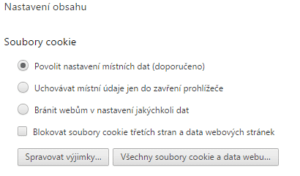
. Under the proposal, it would be possible to set the security level directly within the browser. For example, Google Chrome already allows this: