
Before you start writing
Before you start creating content, prepare your background material. In marketing, this means gathering data from your analyses. You’ll need to know:
- Who are we creating content for? Create personas and always write for a specific persona. Thanks to the persona, you’ll know exactly what tone to use and how professionally to speak to users. You can download a template for creating personas here.
- How does the competition handle content? Prepare a thorough analysis of the competition: do they have a blog and social media? If so, what topics do they cover?
- What can we offer compared to the competition? You surely have some competitive advantage. In marketing jargon, we refer to this as a SWOT analysis. If, for example, the competition excels on Facebook or in PR, learn their tricks for effective communication.
- Which channels will we use? You can choose from social media, email marketing, a blog, and PR articles. Select a few channels that your target audience uses. At AITOM, depending on the type of message, we use a blog, email marketing, Facebook, Twitter and LinkedIn.
- How often will we publish?
- How will we promote the content? Content won’t find its readers on its own. You’ll need to give it a little nudge. For example, by sharing it on social media or via a newsletter.
You’ll find most of this information useful for more than just content creation. Write everything down and save it. This information will serve as a simple communication guide.
Prepare a publishing plan
If you have carefully considered and answered the questions above, you have the necessary groundwork. Thanks to your personas, you know who you are writing for and how to write; you also know which channels these personas use. You understand their behaviour, so you know what topics interest them.
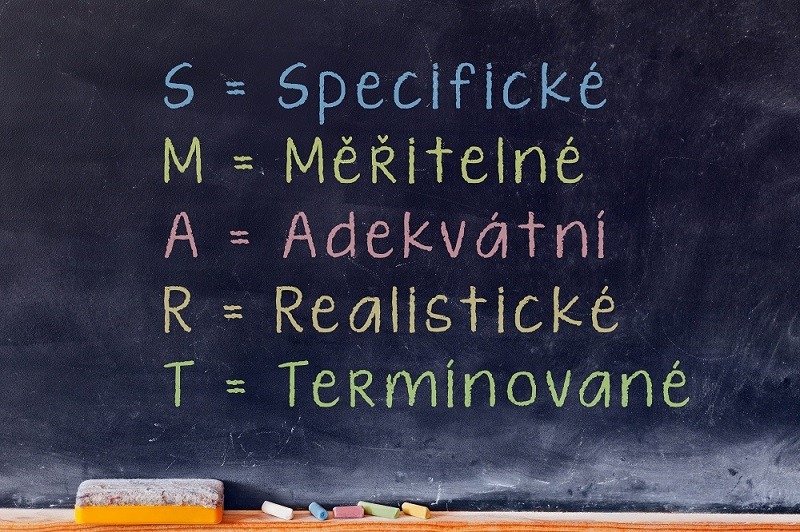
Remember that every piece of text you write should have a goal. In some cases, this may be to strengthen brand perception; in others, it may be to get a manual downloaded or an enquiry submitted. Your goals should be SMART. You can read about how to set goals correctly here.

Analyse your results against these goals. You can use Google Analytics or social media to gauge whether people liked your content or not.
What a publishing plan should include
- Publication date – when you publish the content
- Author – who prepares the content
- Channel – where you publish the content
- Headline – a catchy headline of up to 70 characters that introduces the topic
- Content type – will it be a blog post, an Instagram photo or an infographic?
- Meta description – describe in 150 characters what the text will be about.
- Who is the target audience?
- Purpose of the text – Why are you writing this?
- Link to the text – it’s handy to have this to hand
- How will you promote the text
It may also include fields for metrics – for example, page views, the number of likes or shares on social media; you can also measure scroll depth (i.e. how many people actually read the article to the end). You will then use the publication plan to evaluate the texts.
It’s quite possible that you won’t use all the data. If you have just one writer, there’s no need to include an ‘author’ column.
Draw up the plan according to your preferred publication frequency – for some, an annual plan is sufficient. If you post several times a week on social media, it’ll be difficult to approve an annual plan in advance, so a weekly or monthly one will suit you better.Keep an eye on topics – how people read and share them – and reflect this in your choice of topics. With a good publishing plan, you can create sections without repeating yourself.
Not sure and need help? Drop us a line and our marketing team will put together a publishing plan for you, complete with tips on content creation.