

Children in the 21st century are having a tough time:
- 40% have experienced bullying at primary school (source: Český rozhlas)
- The incidence of self-harm among adolescents reaches as high as 60% (source: psychiatriepropraxi.cz)
- In 2011 alone, over 800 children were sexually abused, 190 of them by their father or their mother’s partner. (source: Ministry of Labour and Social Affairs)
How does this relate to online marketing? Through marketing
, you can offer a helping hand to all these children
. There are non-profit organisations that offer children help over the phone. One such organisation is the
Children’s Crisis Centre
(DKC). Incidentally: In the first half of this year, only one child misused the helpline.
How to raise awareness on social media
The worst thing children facing problems can do is to remain alone. Together with the Children’s Crisis Centre, we prepared an awareness campaign designed to introduce children to the helpline. An expert on the other end will listen to them and help find a solution to the situation. The Centre also offers follow-up therapeutic care for children and their families.
As well as introducing the helpline, the aim was also to illustrate what abuse might look like and when children can turn to the helpline for help.
We know that children regularly use social media, including Facebook, where they are officially not allowed until the age of 13. The truth is, however, that children often lie about their age. That is another reason why Facebook was the obvious choice.
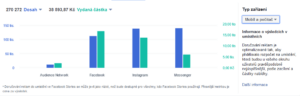
Logically, the campaign should target children aged 13 to 18. But we know the tricks children use first-hand, so we targeted those up to the age of 20. The adverts appeared on Facebook, Instagram, Messenger and in apps.
The comic shows children that they are not alone
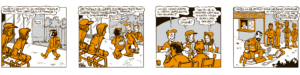
The Children’s Crisis Centre recently published leaflets featuring a comic strip that depicts the everyday struggles children face – from bullying by a classmate to anorexia or blackmail via Messenger. The comic is visually engaging and does a very good job of capturing the characters’ thoughts. The aim was to highlight that they are not alone in finding solutions and that they can turn to someone anonymously for help.

The campaign ran in two phases:
- We launched the first phase during the summer holidays.
In this phase, we tested which of the 12 topics interested children the most. - We launched the second phase at the end of September 2018
. For this phase, we selected only the three ‘most successful’ topics: sexual abuse, eating disorders and bullying.
We planned the second phase for the end of September. Why? Children commonly experience stress at school. They begin to feel greater pressure, which can lead, for example, to eating disorders or aggressive behaviour.
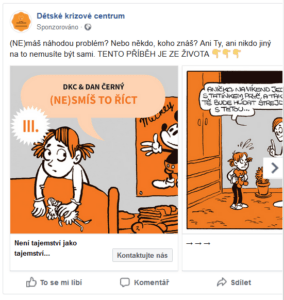
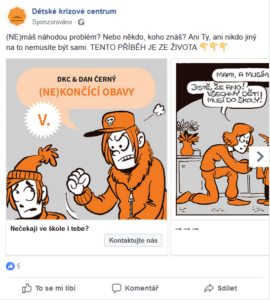
For both phases, we chose a carousel format, where users can scroll between individual ‘panels’ of the comic, and a video. The aim of both the banners and the video was to capture children’s attention and direct them to the Children’s Crisis Centre’s pages
(whether on Facebook or the website) so they could find out where to turn for help.

Campaign results:
Video campaign
- Total reach: 175,000
- Full video views: 44,500 children (~25%)
- Clicks: 5,100
- Cost: 18,000 CZK
Banner carousels
- Number of views: 1.7 million
- Reach: 1 million
- Clicks to website: 10,000
- Cost: CZK 20,000
On average, each child was shown the preventative content three times.
Statistically, the ad reached boys more frequently. This included the ad targeting eating disorders. Anorexia is often seen as a problem for girls. However, the campaign deliberately targeted boys as well. Boys today feel just as much pressure to have a perfect figure.
The topic that brought the most children to the website was ‘You mustn’t say that’ – a topic addressing sexual abuse and parents’ mistrust.
When should you use an influencer?
When you need to grab attention! During the summer, as part of the first phase, DKC teamed up with Zdenek Piškula, a popular actor. Zdenek is 20 years old this year and is well-known and respected by teenagers. He recorded a voiceover for DKC in which he describes bullying (which he experienced himself) and how to cope with it.
We promoted this video as part of the summer campaign. The video reached a total of 140,000 children during the summer campaign. Naturally, a significant proportion were girls. However, boys commented on and clicked through to the video much more frequently.