
SEO is time-consuming, especially if you’re just starting out. Libraries and the internet are full of advice, and with so much information out there, you might not even know where to begin. Start locally.
Local SEO is a great way for small businesses to boost their visibility when they can’t compete with corporations that have huge marketing budgets.
User location is key
Location has a major influence on search results. According to research by the American agency Moz, 90% of marketers believe that Google will, at least sometimes, prioritise local websites over higher-quality ones.
The specific search algorithms are Google’s trade secret. Nevertheless, from time to time Google reveals which factors it considers, and marketers try to work out the rest. Officially, Google focuses primarily on three factors:
- Relevance
- Distance
- Reputation
The first two factors are fixed, but you can influence the third
as part of your marketing strategy.
Don’t be secretive – tell Google everything
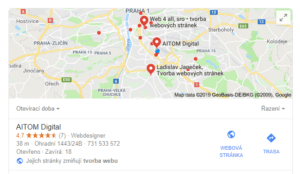
You need users to receive as much information as possible, presented clearly. Google places most of the information about a company in what is known as the knowledge panel
.
This panel appears in
almost 40% of searches
abroad. Almost half of the marketers surveyed recommend filling in the FAQs, news and other secondary information, as they believe this affects search results. 91% of marketers believe that reviews and how customers rate you also have an impact.
Examples of a well-filled panel:

How to get started with local SEO
You need to start with 3 steps:
- On your website, include:
- A description of your services (use relevant keywords in the description)
- Address
- Exact address
- Local area designation
- Directions
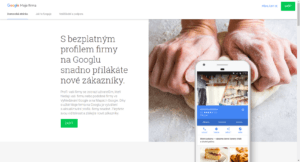
- Create a profile on Google My Business and fill in all the required details, including photos.
- Use structured data in your website code to specify:
-
- Opening hours
- Address
- Name
- Telephone
- Services offered
You can find tips on how to prepare structured data here, for example. You can check whether the codes are working correctly using a tool from Google.
Don’t expect quick conversions
SEO, including local SEO, is a long-term endeavour. Local SEO in particular focuses on brand promotion rather than performance-based campaigns. However, it pays off in the long run.
Google’s algorithm aims to mimic the behaviour and expectations of real users. And real users undoubtedly favour smaller local businesses. Through these steps, Google is very likely trying to boost the visibility of smaller firms that don’t have their own marketing team. You can handle most of the steps above yourself or with just a little help.
What other factors should you keep an eye on?
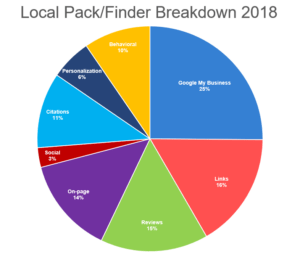
According to another US study, the 2018 Local Search Ranking Factors, the following aspects are evaluated:
- Quality of the business profile on Google
- Link profile (backlinks, anchor text, domain authority)
- Reviews (number and variety of reviews)
- On-page signals (keywords, meta tags, domain authority)
- Mentions
- User behaviour (CTR, clicks on mobile devices)
- Personalisation
- Social media engagement
Accept negative reviews and don’t criticise
Try to encourage customers to review you
on Google or social media.
Many businesses dislike seeing negative criticism, but be careful – never delete such reviews, nor go on the offensive against the customer. Many marketing textbooks on crisis communication cover how to communicate in such situations.
The key is always to thank them for their feedback and acknowledge the problem. Respond calmly and assertively.
Both Google and the reviewer will appreciate it.