

‘Speculationology’, as Messrs Řezáč and Kvasnička have dubbed this phenomenon, destroys good ideas. We often assume that the best approach is to communicate with Generation Z, ideally in such a way that we can accurately measure the performance of the marketing channel and ensure the brand is clearly visible in the campaign. Unfortunately, all of this is pure fantasy. Rand Fishkin and Bob Hoffmann explain why.
Assumptions are like an invisible giant that is dismantling our marketing
A presentation by Rand Fishkin, founder of the MOZ tool and author of several books on SEO, bore a similar title.
Rand spoke about all the kinds of prejudices that prevail in digital marketing. For example, that girls aren’t good programmers, or why we work 80 hours a week even though we can’t maintain productivity for that long.
The marketing world around us forces us to believe things we shouldn’t take seriously.
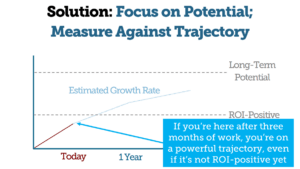
Assumption #1: Investment in marketing must be measurable and deliver a return on investment (ROI)
- The most easily measurable channels are: PPC, social media, remarketing, email marketing
- Conversely, you can’t really measure these at all: word of mouth, SEO, social media (organic sharing of topics), quality content, PR
Who among you would choose a PPC advert over a friend’s recommendation when making a purchase? No one. Focus on the bigger picture and the potential for return on investment.
Assumption #2: Search traffic comes via SEO or PPC
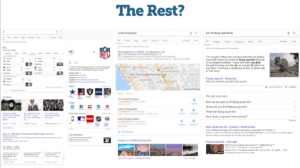
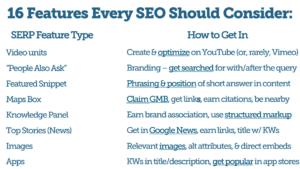
Well, yes, about 55%; other users search via less traditional formats: featured snippets, images, local results, videos and more. How do you get into these results? High-quality website content, structured data and the like will help.
Assumption #3: Content marketing means publishing on our website
Why limit yourself? Content marketing should involve creating content across the internet. If your site is new or doesn’t yet have a good reputation with Google, it’s far more effective to publish elsewhere
. Among the best options are Slideshare
(a social network full of presentations and infographics), Pinterest, LinkedIn and YouTube
.
If you manage to rank first in search results, it isn’t necessarily down to optimisation for a particular keyword or technical aspects. Google strives to provide users with answers.
The key to success is this: solve the user’s problem better than the competition, and Google will love you.
If any SEO thinks that pogosticking isn’t a thing, Google now has this feature that appears after two ‘backs’ pic.twitter.com/tGSpjBN78v
— Steve Hammer (@armondhammer) 7 October 2016

When marketers are from Mars
Bob Hoffman runs the Type A agency, is a copywriter himself, runs the AdContratian blog and has published several books. He now travels the world, challenging marketers and debunking assumptions of all kinds.
Do you know what Bob thinks would happen if a massive asteroid were to hit Earth right now? Only two things would survive: cockroaches and copywriters.
Erm, thanks, Bob, for appreciating both my work and your own. The whole talk was pleasantly self-deprecating and full of similar jokes. According to Bob Hoffman, we live in the grip of three illusions:
1) The digital illusion
Marketing media, including Seth Godin and the Huffington Post, once predicted the demise of offline advertising. We’re still waiting. Digital isn’t a panacea either – in 2016, 92% of purchases in the US still took place in shops, not online.
The situation at Procter & Gamble illustrates this perfectly. In 2013, the management decided to invest heavily in digital advertising and targeted advertising. It was still working brilliantly in 2014.
The following year, however, sales plummeted by 8% – that doesn’t seem like much, does it? But in P&G’s case, that amounts to 8 billion dollars.
Put simply – they stopped being visible and their customers sort of forgot about them. This brings us to the second illusion.

2) The brand illusion
The fact is, customers aren’t very loyal to brands.
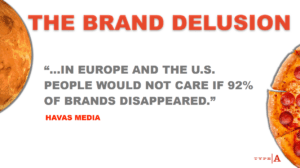
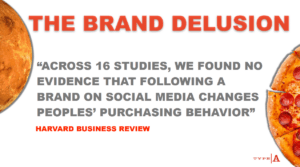
“Honestly, I wouldn’t mind if the Havas Media brand disappeared
,” remarked Bob Hoffman. Who would really miss the competition all that much, anyway?
We have to admit that a brand is far more important to us marketers
than to our customers. What do you base your decision on when you go to buy toothpaste? Perhaps it’s the price, a herbal formula or the promise of a dazzling smile, but do you really think you absolutely must buy Colgate and under no circumstances Odol?
It is not brand loyalty that matters, but the quality of the product and the accompanying services. We might buy the same product a second time, but the third time we’ll still go for the toothpaste on special offer.
3) The illusion of age
People over 50 in the United States:
- Buy 50% of new cars.
- Outspend other adults online by a ratio of 2:1.
- Own 70% of the wealth.
And do you know how many companies target them in their advertising?
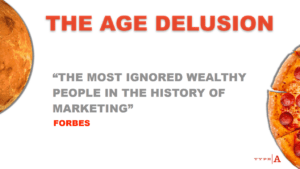
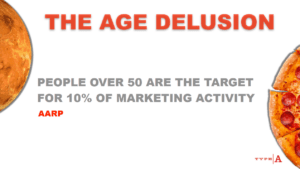
Companies are thus often depriving themselves of customers who can afford their products. Today’s fifty-somethings are tech-savvy and follow trends just like anyone else. According to Bob, however, social pressure forces us to overlook them (so that we can stay young and beautiful…). After all, how often do you see, for example, fashion adverts featuring a model over 40? Even adverts for anti-ageing creams are often filmed with suspiciously youthful women.
Take a step back and look at your own marketing. Next time you’re planning a strategy, ask yourself straight away: ‘How much am I influenced by standards and assumptions?’ Because they influence us all.
It’s the quality of service that matters; then we’re willing to recommend the product to others – the product, not the brand. And when you’re truly good, people will talk about you, but they’ll recommend you offline, so you won’t be able to measure it. That doesn’t mean you should give up on marketing. You just need to think about it in a broader context.
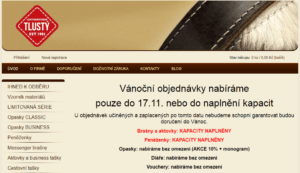
The key isn’t big budgets or 24/7 communication on Facebook. The key is to offer the customer an interesting solution. Take Prague’s Brašnářství Tlustý as an example: they don’t use PPC, nor are they at the top of the rankings, but you won’t be able to order a Christmas present from them anymore – they’re sold out… Their success lies in authenticity.

The photographs shown are taken from a presentation by Rand Fishkin and Bob Hoffman.