
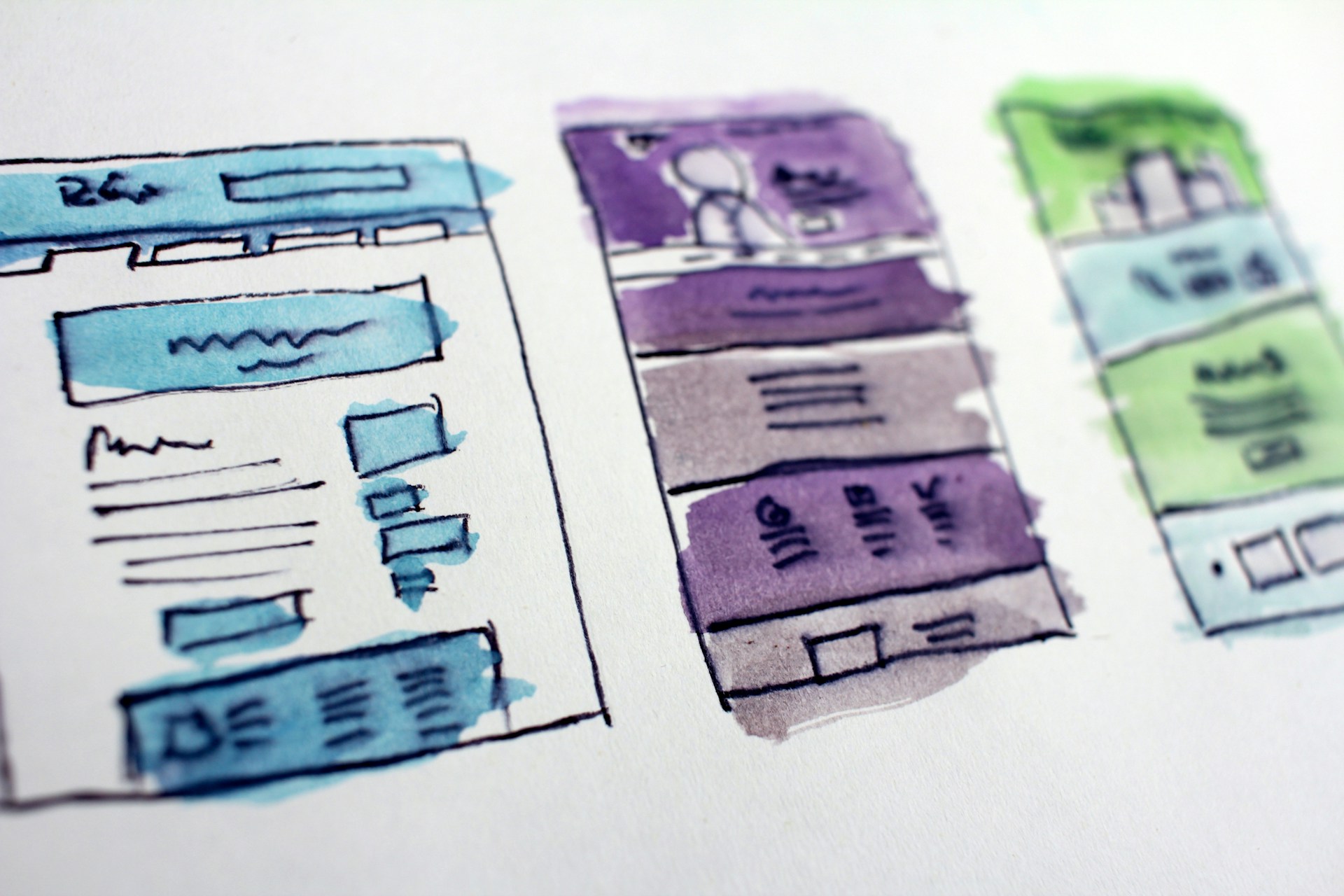
Many of us want websites
that are attractive, functional and profitable. Non-functional sites simply
drive customers away, who would rather buy a product or service elsewhere. In
deciding whether to continue reading, browsing or making a purchase,
it is not just polished graphics that play a role, but also the typeface,
design, content strategy and colours used. Read on to find out why you should consider functionality, design and
typography when designing a website.
Typography: putting an end to illegible text and block alignment
You’ve surely noticed at some point that certain websites are harder to read, and you’re unable to finish reading the text or can barely see it. This is usually down to poor typography. Even when designing on their own, graphic designers take into account text size, colour and line spacing, because well-balanced text is the key to successful readability. Did you know that the most readable text size is 14px?
From practical experience and through coding itself, we know that text aligned to the block is not the right way to go; there is a significant difference between a website and a printed publication – what can be easily achieved in a newspaper column cannot be done on a website.
 vs.
vs. 
Appearance and design: simplicity is key
No one wants a dull website lacking in emotion and the so-called ‘wow factor’. At AITOM, we ensure that every website we create captures the visitor’s attention enough for them to read it, browse through it or make a purchase. Colour psychology plays a significant role; it is important that the website is balanced in this respect and not garish (unless that is the intention). Have you heard that the background colour affects reading speed on a website? A background other than white causes users to read 30% slower.
In graphic design, ‘flat design’ is currently popular; it has mainly caught on with corporate websites, bloggers or large portals, where the motto is ‘simplicity is power’. At the expense of flat design, ‘skeuomorphism’ – which reigned supreme here for several years – is slowly fading away. Even so, there is always a sensible way to make the most of all the options and create an attractive website. That’s what a web designer is for – to tailor a website to your exact requirements.
Tip:
When designing a website, consider whether it’s necessary to use stock photos
; according to research, 80%
of users automatically overlook
them. Provide the web designer with your own photographs; people will appreciate it.
Functionality: an unusable website, a bad website
The worst thing that can happen on a website
is when your online shop, or anything else on the site, cannot
be found or understood by the user. If a visitor to an online shop has to laboriously search for items
during the ordering process, this indicates a usability
, and this often leads to the user leaving the site and shopping with
the competition. Graphics and design generally follow their own rules, which must be adhered to. Among the most important
of these are clarity and usability, because unclear graphics
are bad graphics.