
Kim is an analyst and designer, and judging by the number of pictures of chimpanzees and gorillas in her presentation, she’s also a monkey lover. She doesn’t do marketing herself; rather, she provides the data for it, and gets annoyed when someone asks her to make the logo bigger on a poster.
The aim of all analysis should be to understand either the customer or the market. The question, then, is how to gather information from customers so that we can understand their motivations, behaviour and habits. The solution is obvious: a questionnaire.
Many companies imagine the ideal survey to be a simple form or questionnaire, perhaps like this:

But what does such a survey actually tell you? You no longer know what lies behind the success of the coffee – high-quality Arabica beans or the friendly manner of the flight attendant (this is an airline survey). The problem with such surveys is that they are biased and inaccurate.
When you ask a customer how they make decisions
Imagine a car manufacturer’s question: “What factors do you consider when choosing a new car?” How you want to see yourself also influences your answer to such a question. Kim gives an example using herself: “I’m rational, aren’t I? I go by the data, right? So based on fuel consumption, performance and the like… So of course I drive a Mini Cooper, because it’s cute.
”
As an analyst,
you have absolutely no way of verifying how a customer actually behaves when making a purchase
. If you ask about habits in a questionnaire, it won’t help you much. Take this question, for example: ‘How do you spend your mornings?’ You might reply: ‘I have breakfast, take the children to school, and on Wednesdays I also have a yoga class.’ Does that answer sit right with you?
So you don’t brush your teeth in the morning and go to work in your pyjamas? We have a whole range of invisible habits that we perform so automatically that we simply don’t think about them.


How to ask the right questions?
Questionnaires or surveys are great if you’re dealing with a yes/no – either/or – type of problem. But you won’t find out why or how. If you need comprehensive information, you have two options: an interview or direct observation.
It’s always worth asking customers directly
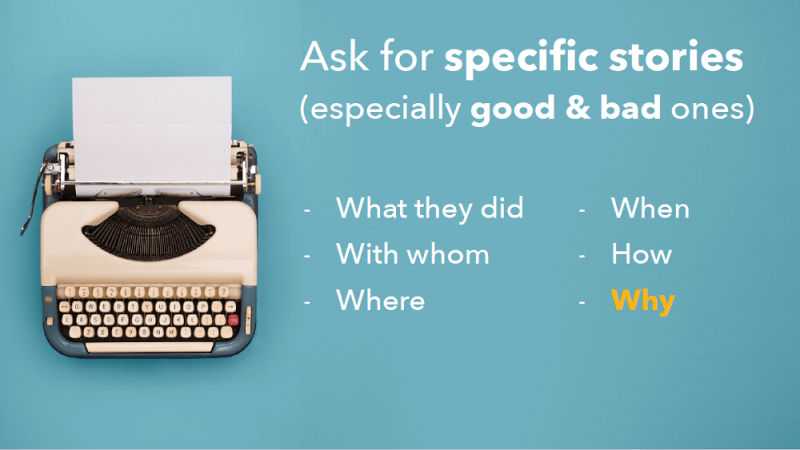
. The most common concern is that asking questions will bother customers or that they’ll refuse. That’s not usually the case. Some may turn you down, but many will be pleased that you want to hear their story. Even those who have complained about a product or had a negative experience. Always ask ‘why’ first:

In practice, there are several options. If you have an online shop or very busy customers, give them a call. Read a case study with instructions on how to prepare a telephone survey here. Customers won’t have to travel anywhere or worry about finding the time. If you approach the conversation in a sufficiently personable manner, it will serve you well.
You could hire an external agency to speak to customers on your behalf. But Kim wouldn’t recommend it. In her view, it’s a bit like outsourcing the catch: “Not exactly what you intend to do, right?”
How to track customer behaviour online?
Monitoring customer behaviour, which is the second way to find out why, is very easy online. There are a whole range of tools for monitoring customers.
From our experience, we recommend HotJar; it’s a tool that records user behaviour. You’ll see where and how they click, but the tool doesn’t store any information about them. You can also track user journeys in Google Analytics and other tools. You’ll easily identify problem areas. You won’t find out why a customer is buying, but you’ll know how.
Web analytics plays an irreplaceable role in this regard. It is the first step you should focus on, whether you need to improve your existing website and services or are planning a redesign. Thanks to high-quality analysis, you can eliminate errors that prevent customers from purchasing a service or irritate them for other reasons.
Understanding the customer properly is the key to success
The basis of analytics is, in fact, understanding the customer well. You need to understand their expectations and needs so that you can engage with them effectively. We may have different opinions on what a wooden chalet in the mountains looks like:

Our consultant Daniel gave a talk at Entrepreneurship Week on how to understand customers’ expectations of your website or online shop.
The downside of the internet is that the customer’s relationship with your site is quite abstract. You can’t wait at the shop exit and ask how satisfied the customer was. Simply because, at that point, the customer hasn’t yet received the service or product and wouldn’t therefore be able to evaluate the whole experience.
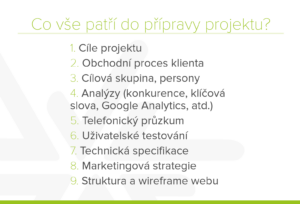
That’s why you define personas, so you know how to cater to their tastes. This is precisely why, when preparing a web project, we strive to analyse as much data as possible. We try to use tools that provide us with hard data, call customers and conduct tests with them. Whilst user testing primarily addresses the usability of the website, we also set aside part of it for questions regarding motivation.

The key, of course, is to think carefully about the website. This applies to analytics too, and to deciding which analyses you’ll actually use. After all, nothing works without a bit of common sense.
You can find the full lectures here: