

Who is required to record sales under the EET scheme?
Sooner or later, virtually all businesses will have to record certain types of payments. The obligation applies to both high-street shops and online shops. It applies to everyone, regardless of whether they are VAT-registered or not.
The transition to electronic sales records has four phases:
- Accommodation and catering services – from 1 December 2016
- Retail and wholesale – from 1 March 2017
- Other activities excluding those in phase 4, such as the liberal professions, transport and agriculture – from 1 March 2018
- Selected trades and manufacturing activities – from 1 June 2018
Phase 3 also includes training and the provision of hosting services.
When is it necessary to record sales?
The following payments are subject to recording:
- In cash
- By payment card (including PayPal, etc.)
- By cheque or bill of exchange
- Forms similar to those listed above (i.e. gift vouchers, meal vouchers, payments in bitcoins, tokens)
- Deposits
Conversely, transfers from one account to another are not subject to recording. A list of payments exempt from EET can be found at etrzby.cz. If you are unsure whether a particular payment is subject to recording, you can contact your tax office, which will then issue you with a formal statement – unfortunately, for an administrative fee of CZK 1,000.
Please note: It is the actual method of payment that counts, not the information on the invoice!
How does the system work?
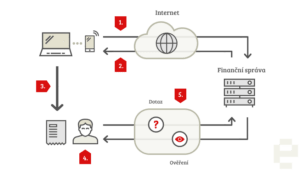
© Financial Administration | www.etrzby.cz
- At the till, you enter the price and sale as usual. The till automatically sends a transaction report in XML format to the Financial Administration.
- The tax office’s system will immediately send back a confirmation with a unique code.
- The cashier prints a receipt containing this unique code and hands it to the customer.
- Both the customer and the business owner can verify whether the receipt has been registered using the tax authority’s app.
The entire code assignment process should take less than 2 seconds, so it should not hold up either the cashier or the customers. If the connection fails for any reason, the transaction simply needs to be reported to the tax office within 48 hours.
What equipment do I need?
It is not necessary to purchase a special cash register. Any device (such as a mobile phone, tablet or computer), an internet connection and special software that connects your shop to the tax authority’s system will suffice. You will also need a printer. However, receipts can also be sent electronically, for example by email or MMS.
A wide range of companies offer cash register software; for example, Shoptet already has the software built directly into its template.
The Association of Small and Medium-Sized Enterprises of the Czech Republic offers a handy guide on how to choose the best device.
What are the customer’s obligations regarding EET?
The customer has none; originally, they were required to take the receipt, but this is not included in the current version of the law.
What if my internet connection drops or something else goes wrong?
Under the law, you do not have to wait for the internet to come back online. You can print the receipt in offline mode; the receipt will contain a different type of verification code (the taxpayer’s security code). The business owner is obliged to report the payment to the tax office within 48 hours.
The till software should be set up so that, in the event of a failure, it automatically sends the receipts and you do not have to worry about it. In exceptional cases, receipts can be submitted to the tax office within 5 days (for example, if you are trading in a location without internet access).
You can find detailed information on how the system handles operations here.
What solutions are available for online shops?
- You can switch to the Shoptet system, which has a ‘Cash Registers’ module and meets EET requirements.
- You can opt out of all recorded payment types – leaving you with bank transfers and cash on delivery, which will undoubtedly reduce the convenience of the shopping experience and deter some customers from making a purchase.
- You can operate from abroad, in which case the records are governed by local legislation.
SET UP MY ONLINE STORE ON SHOPTET
How do I set up sales records?
From 1 September, you can obtain an EET certificate, which is required to ensure that a specific payment is attributed to your business.
From 1 November, it will be possible to test the sales records and iron out any shortcomings.
How do I obtain an EET certificate?
First, you must apply for authentication details, i.e. login details for the tax portal. You can obtain access either electronically using your data box login details (the tax office will then send the authentication details to your data box) or in person at any tax office (in which case you will receive the authentication details immediately in a sealed envelope).
Once you have your authentication details, log in to the EET register.
You generate the certificate yourself. You can have one certificate for your entire business or several, for example for different online shops or business premises. You then install the certificate on the device you use as a cash register. You can find the manual from the tax office here.
The certificate is valid for 3 years; after that, you must renew it, again via the tax portal.
I have an online shop on Shoptet, what should I do?
Shoptet has a Cash Register module that records sales. The module is available in licences from Lite upwards.
I have an online shop on WordPress or another content management system; what should I do?
According to our information, no cash register plugin in WordPress is currently capable of recording sales. A solution could be to link orders to an accounting system that handles this (such as Pohoda) or to switch to Shoptet. You can also cancel recorded payments, i.e. stop accepting cash or card payments, thereby exempting yourself from the EET obligation.
Why choose Shoptet?
Limiting payment options is not a solution for all online shops. Some online shops do not want to restrict their customers, whilst others simply cannot afford to do so. Introducing additional hardware and software can be a significant hurdle for less tech-savvy business owners. An online shop template from Shoptet offers the ideal solution.
Shoptet offers 5 different plans depending on the number of products you wish to offer in your shop. 4 of these plans include the Cash Register module, which can record sales, in the price. The price for a complete e-shop solution therefore starts from 431 CZK per month. In this cheapest version, you can offer up to 500 items and have 33 modules at your disposal – such as customer reviews, online chat, basic SEO, and modules that connect the e-shop with Heureka, Google Shopping and Zboží.cz.
Who can set up Shoptet for me?
Be ready for the change in good time! If you’re interested, we’ll set up your shop on Shoptet. We offer a comprehensive package of services – we’ll create customised graphics for you, populate the e-shop with content, transfer all your products and provide full marketing support.
The price of the package starts at around CZK 49,000 for a medium-sized e-shop, but this depends on the number of products you wish to transfer and any additional services (such as e-shop testing, copywriting, XML feed optimisation, and so on).
Examples of our projects on the Shoptet platform:
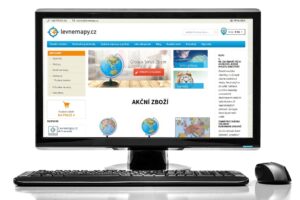
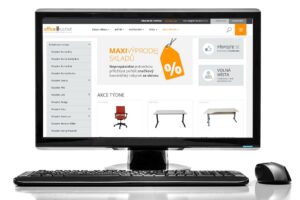
At AITOM, we only have experience with building e-shops on our own content management system
, WordPress and Shoptet. It is therefore possible that other platforms are also EET-ready, but we do not wish to comment on something we are not intimately familiar with.