
Typical real-world examples
In B2C, a company is typically interested in the PNO (profit margin) of its marketing activities. The marketing specialist must therefore analyse conversions in Google Analytics, compare sales data from the e-shop system, review advertising expenditure on Google AdWords, Sklik and Facebook, check the costs of the email marketing tool, and not forget the cost of their own time or, where applicable, agency fees. However, there may be many more tools (e.g. LinkedIn, HotJar, Collabim, MarketingMiner, and many others). They then enter the data into Excel and start calculating. And this is still just about answering a single question. When looking for patterns of behaviour from individual sources, for example, they spend hours clicking through Google Analytics and preparing a presentation for the company’s management.
In B2B, the aim is for the company to know how much a lead costs, which traffic sources are most effective, or which pages are most important prior to conversion. They may also evaluate long-term ROI and analyse the long-term value of customers from specific channels or campaigns. Essentially, it is essential to link marketing and sales data; otherwise, the company is blind.
The solution is a customised automated report
At AITOM, we therefore implement fully automated reporting for our clients. Using clear dashboards, this answers the most common marketing questions and saves them a lot of unnecessary work. We create reports in Google Data Studio and integrate all the paid advertising systems and tools the client uses. We also factor in the cost of internal work or work carried out by a marketing agency to ensure the figures are truly accurate. Together with the marketing/sales teams and company management, we define which questions they want answered, what they are tracking or laboriously calculating, and we then create a bespoke report. This allows us to link any company data to which we are granted access.
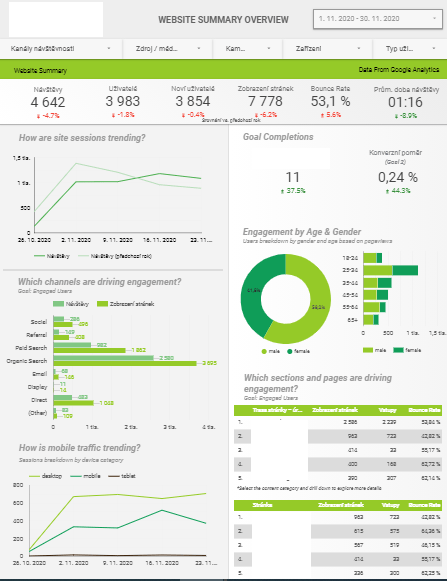
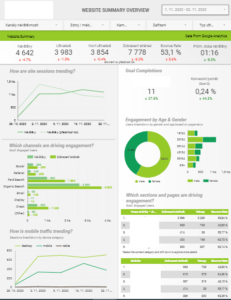
This gives both management and the marketing/sales department a real-time overview (the report is accessible online at any time) of how the company is performing; marketing specialists can devote their time to finding interesting insights in the reports and, as a result, make the right decisions. Within the report, you can interactively filter by, for example, date, traffic sources or device type. To give you an idea of what such a report might look like, I’ve attached an image of an automated report for an unnamed client.
And what about you? Are you wasting time, or have you already sorted out your reporting automation? We’d be happy to help you with this and create a bespoke automated reporting system for you.
Book a free initial consultation – we look forward to hearing from you.