
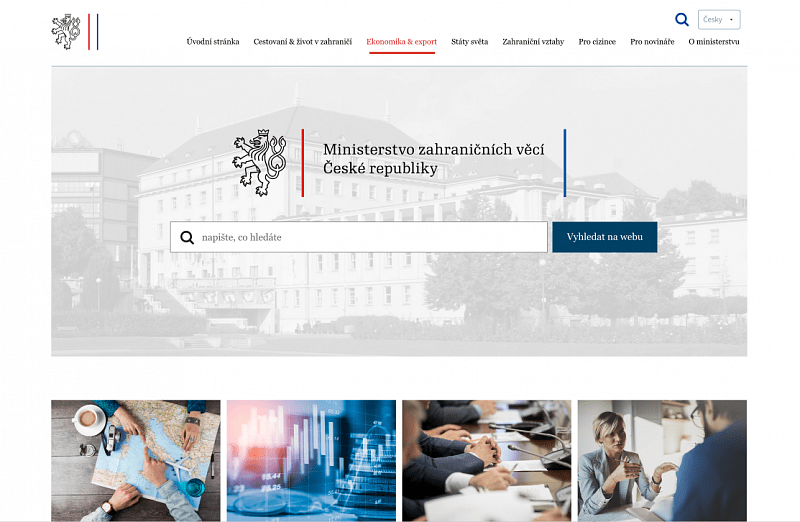
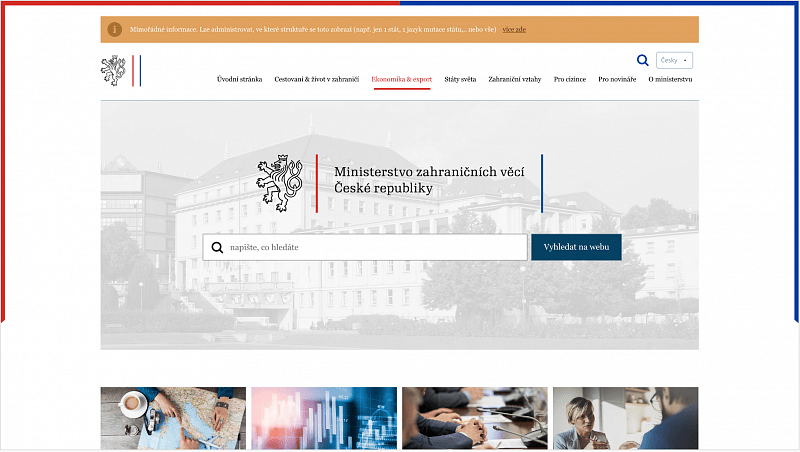
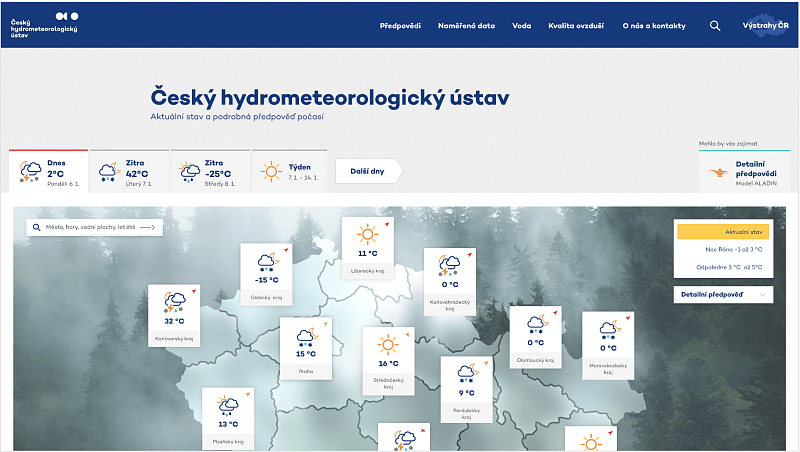
However, building websites for public institutions involves a number of specific considerations. Some are widely known, others less so. At AITOM, we only discovered the most important aspects whilst carrying out specific projects. These ranged from smaller ones for the Prague City Museum or the Prague Exhibition Grounds to truly substantial ones for the Ministry of Foreign Affairs or the Czech Hydrometeorological Institute.
These are the three key things you need to bear in mind before submitting a bid for a major project funded by public money:
1/ You won’t make it without a thorough initial study
This applies to any website, of course. In the case of the Ministry of Foreign Affairs and the CHMI, however, the initial study was actually the main objective of our collaboration.
Both institutions made the right decision to first hire experts for the analysis and process. Only then did a separate tender for the website developer follow.
Our initial study always involved several months of intensive collaboration.
Its aim was to find thorough answers to the questions:
-
what the website’s target groups are
-
how to prioritise the content on the website
-
what the client’s requirements for the website content are – what requirements do the individual departments that work with the website, or need it for their work, have
-
what content from the old website should be retained and what should not be included in the new website at all
-
what the requirements are for any new content that is yet to be created
-
What the structure of the new website will look like, taking all requirements into account
-
What the scope and format of the wireframes will be
-
What the visual design of the future website will look like
-
who will help prepare relevant and concise text
-
What technical parameters must the website meet (functional and non-functional requirements for the website)
-
legal accessibility requirements and availability
-
SLA requirements – i.e. for subsequent support
-
What requirements must suppliers meet, and is it possible to engage subcontractors?
-
An expert assessment of the complexity of development (estimate of cost and implementation schedule)
-
how to work with existing third-party applications, if any, should they be integrated into the website
-
how to address cybersecurity – in collaboration with a specialist on the client’s side and taking into account their specific requirements
-
What criteria should be set in the tender process
-
What support will the client need during the actual tender process for the website supplier?
-
what further oversight will be required from our side during website development
2/ It’s going to be a long haul
That’s probably what everyone thinks. But we really mean a long time. Even if you’re firmly in control of the project, have streamlined processes and are available on call, it’s worth allowing for a time buffer. A typical public institution is, quite simply, a bit cumbersome. That’s neither good nor bad, but it’s just the way it is.
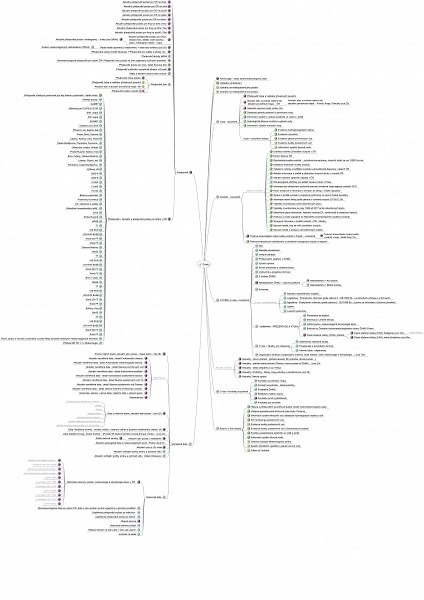
For example: when it comes to a large-scale website, such as those run by major government departments, it likely contains a vast amount of content that has accumulated over time. In a corporation, someone from marketing would probably come in, hold one, two, three meetings, and it would be clear what to delete and what to keep. In a state institution, things usually don’t move that quickly. For example, at the CHMI, it was actually necessary to go through the old website page by page. To ensure nothing important disappeared. It requires patience and… that time buffer.
And that’s just the content. Imagine what it’s like when you get to the next steps.
3/ Prepare for a slightly different approach to communication
All it takes is a few departments that regularly contribute to the website, a few experts who have something to say about the new pages… a marketing department that’s a bit less assertive than what you’re used to with commercial clients… and you’ve got communication bottlenecks. In a public institution, communication simply works a little differently, and it may take a while to figure out who’s who and who decides what. Or, in some cases, where it isn’t entirely clear who makes the decisions.
What helps?
-
Setting expectations so that the client knows exactly what steps to expect and why. Also, what happens if they deviate from the process.
-
Arrange regular meetings
-
Define tasks for both the client and the agency during these meetings, with clear deadlines
-
Create an internal team on the client’s side comprising people who need the website for their work
-
Drive the decision-making process through regular communication
Even in public institutions, there are people who want to be proud of their results. Be a reliable partner and mentor to them, and together you can achieve a result that will inspire other similar clients. Ideally, this will lead them to approach you directly in the tender process.
We know from our own experience that building a reputation as an agency that excels at public sector contracts pays off!
Do you need help with a major project? We’re here for you!