
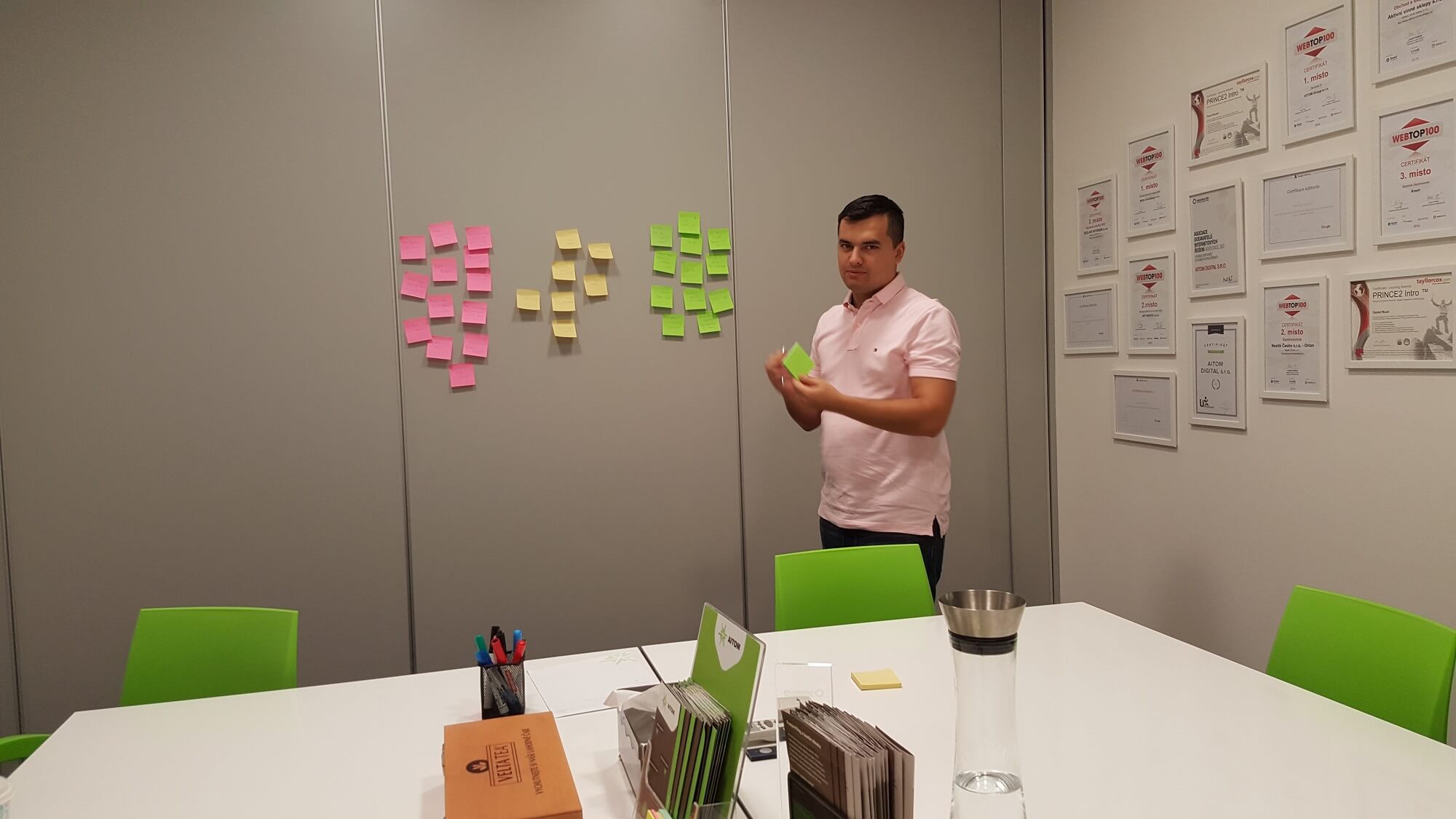
Internally, we call this method the ‘sticky note method’, as some of the outputs can look like this. This, specifically, is an analysis of AITOM’s customers, taken roughly halfway through the team’s brainstorming session:
What is the VPC?
The Value Proposition Canvas
is a comprehensive method for creating offers. You can use it both when designing new services and products, and when communicating existing ones. You can download the template here
.
The method is based on customer segment analysis
. The analysis describes three basic characteristics:
- Customer jobs – the problems or needs that customers are trying to solve. A job can also be a desire for social recognition or promotion.
- Pains – what troubles customers (risks, concerns, problems that prevent them from buying)
- Gains – the benefits customers would like to receive
The product offering is shaped according to the customer’s jobs, expectations and pains. It is important that the resulting product provides answers to all the ‘whys’ a customer might ask.
How to use the VPC sticky note method
Step 1: Customer segment
Choose a representative persona
from the customer segment. You can segment customers by stage in the purchasing process, by budget, by key tasks or by interests. There are many options; it depends very much on the specific project.
We’ll demonstrate the process using the example of Labeloo
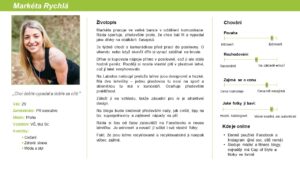
, an e-shop selling eco-friendly bottles. We’ll choose the following segment: women who go to the gym and want to look trendy on social media. Analytical tools tell us that these women are aged 18–24. A typical persona would be Markéta:
Step 2: Tasks, expectations and concerns
Grab some classic Post-it notes
(in 3 colours). We usually use yellow for tasks, red for concerns and green for expectations.
Start with the tasks. On each note, write down what your customers are dealing with. What are their tasks in relation to your product? Stick the notes with individual tasks one below the other on the wall. Do the same with concerns and expectations (this includes all your additional benefits). Individual items may also overlap.
Example (we’ve selected 4 representative ones, but you may have many more ideas)
- Tasks:
- Staying hydrated during strenuous exercise
- Look good in front of a friend
- Versatile design – must be suitable for both work and exercise
- Concerns:
- Price
- Durability of the bottle
- The design will soon get boring
- Will the bottles seal properly? (They mustn’t leak in my handbag)
- Expectations:
- Eco-friendly, made from recycled glass
- Modern design – I’ll get more likes on Instagram
- Lifetime guarantee
- Dishwasher safe
3. Priorities
Now sort the individual notes by priority. The most pressing tasks and the most interesting benefits will be in first place. There can easily be several tasks in first place.
You now have a clear structure of what the customer wants, what they’re worried about, and what they’d appreciate. This analysis is a great source of information for the UX specialist who’ll be designing the website structure, the copywriter, and the graphic designer.
Where to get the data?
The advantage of the sticky note method is its simplicity. You can even do it ‘off the cuff’. We used the sticky note method for AITOM as a brainstorming session involving project managers, the sales department and marketing.
The key is to know your customers well. You can gather data through in-depth interviews, online surveys or user testing. Always verify your conclusions with members of the chosen segment.
How to use the data
The analysis will reveal what customers expect from you and how they envisage the ideal purchasing process. It will help you create a meaningful
website structure
that assists users with their purchases. It will enable you to
tailor content
to your customers.
The result will be a highly intuitive website that addresses customers’ concerns at every step, advises them and offers them added value. You will also know what customers value most about your product or service. And therefore, you will know exactly what to promote
in your marketing campaigns.