
Myth 1: The subject line has the greatest influence on whether a user opens an email
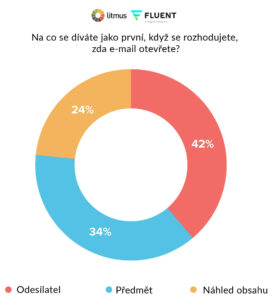
The truth is that the sender’s identity matters far more than the subject line. In September, we tested an email campaign for one of our clients. By the time users received the third email, they were no longer reading the subject lines. By that point, we had managed to build a trusting relationship; users knew that the email would solve a problem for them or provide advice, and that was the decisive factor.
AITOM advises:
Do you send a newsletter? Send it on behalf of a single person from the company. Our newsletter – AITOMoviny – arrives in your inbox on behalf of our CEO, Pavel Houser.
Myth 2: The subject line only affects the open rate
We already know that people don’t open emails solely based on the subject line. The subject line influences the entire conversion process. Try this out with an A/B test where you change only the subject line. How much will the number of clicks differ? Also monitor how user behaviour differs on the landing pages. How is this possible?
The subject line influences our expectations of the content. If it hooks us, we might spend longer looking for the conversion button or be willing to spend more.
AITOM advises:
Your subject line should always match the content that follows. You can entice users, but you can also confuse or disappoint them if you don’t offer them what they expected. And that is punished uncompromisingly by a loss of conversion.
Myth 3: The sole purpose of the subject line is to get the user to open the email
The open rate is just a number; it says nothing about conversions. The goal of every campaign is conversion, not simply for someone to see it. A conversion doesn’t necessarily have to be a purchase; it could be filling out a form, downloading an e-book, or anything else that’s commercially important to you.
Appropriate targeting is key. This applies to PPC, Facebook ads and email campaigns alike. In reality, you don’t want a 100% open rate; you want only relevant users to open and click through on the email. Not to mention that users get annoyed if you clutter their inbox with irrelevant information.
AITOM advises:
Advanced email marketing programmes allow you to remove inactive users from your database. For example, MailChimp rates users using a star system; if you send a large number of emails to a specific user and they don’t open or click through any of them, their rating drops. You then have the option to delete these inactive users. The size of the database is overrated; the relevance of contacts is key. Among other things, this also saves you money, as you usually pay for the size of the database.
Myth 4: To get a user to open an email, the subject line must be provocative
According to research, the best subject lines are direct, use the brand name, and are actually quite boring. Creativity is of course valued, but users appreciate a factual subject line more (unless, of course, you’re publishing Blesk or another tabloid magazine).
MailChimp analysed 40 million emails and concluded that the best subject line describes the email’s content in a factual manner.
AITOM advises:
Our most successful subject lines aren’t the most creative, but you know exactly what to expect:
- Get off to a good start! News from Vivobarefoot – open rate 56%
- Zboží.cz is changing its XML feed. Get ready in good time! – open rate 51%
- News and highlights from LeasePlan – open rate 55%
Myth 5: The worst that can happen is that the user doesn’t open the email
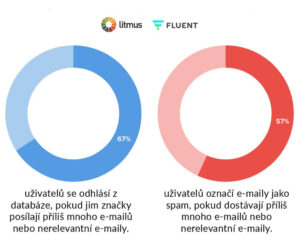
The worst thing that can happen is that the user opens the email but is so disappointed by the content that they unsubscribe from the database, report the email as spam, or complain in some other way. If you want a high open rate at any cost, it will come back to haunt you.
The primary goal should be conversion, but that is a short-term goal. The secondary goal is building a long-term relationship.
AITOM advises:
Respect the time and privacy of the users in your database. They are not just a percentage of your profit, but real people; before you send them anything, ask yourself exactly how it will help them. Always send messages to a segmented database and regularly clean your database.
Myth 6: If users don’t open an email, it’s as if you never sent it
Sometimes we are overly influenced by simple metrics. The open rate is precisely such a metric. We sometimes think that a user will either open an email or ignore it. However, the conversion process is long and complex. A black-and-white view of the world does not work in real life or in marketing.
Firstly, many users still block images by default. It is therefore technically possible that a user opens the email, but because they do not download the images, the open is not recorded. Secondly, users do not always behave in a linear fashion. The subject line may lead to an action, but not to an open.
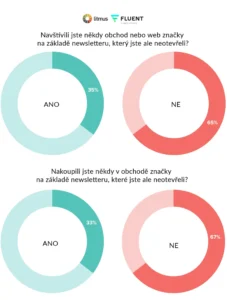
Imagine that the email subject line reads ‘40% off everything until the end of the weekend’. A rational user might simply open the online shop and start shopping straight away; the offer is clear, so why would anyone bother reading the email?!
What does a good subject line look like?
- It respects the recipient’s time and privacy
- It puts the recipient first
- It allows recipients to easily identify emails that might interest them
- It is factual and accurately describes the email’s content
- It fosters a relationship with the recipient
- Highlights the added value, explaining why the user should read the email.