
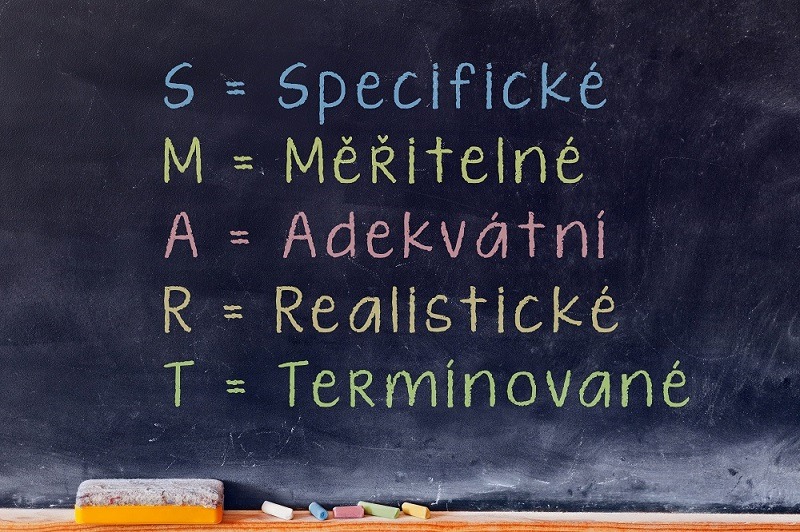
If you don’t set goals, how will you know whether your website, blog or online shop is successful? Sensibly set goals form the basis for evaluating, testing and improving your content. You can set meaningful goals, in which case they’ll be SMART. Alternatively, you can use a random number generator.
Along with your goals, create a strategy for achieving them. Without a strategy, every goal is just a pipe dream.
Phase 1: Why do you want a website?
We won’t waste time here debating whether or not it makes sense to have a website and communicate with customers online. Let’s talk about what you expect from your website. Do you want to promote your brand? Get new orders? Grow your fan base and foster their loyalty to your brand? Or do you just want a trendy online business card?
A website can fulfil a whole range of tasks. Once you’ve answered the question of what you want from your website, you’ll be one step closer to creating a functional website that can meet those goals.
Phase 2: Setting goals
You will, of course, be measuring your website’s goals, so they must be set correctly to be measurable in the first place. Not sure how to set your goals?
The right goals must be SMART:

What does a proper website goal look like?
A goal must be specific, so let’s look at an example of what a properly set goal should look like. Imagine you own an online florist with a delivery service: www.kytice-domu.cz. The goal of your website is therefore to sell as many bouquets as possible. However, such a goal is rather vague and cannot even be measured – honestly, how many flowers exactly is ‘a lot’?
The goal of the website www.kytice-domu.cz is to sell 240 roses and 60 bouquets per month.
- Specific:
The goal is sufficiently specific. It clearly defines which services I want to sell and in what volume.
- Measurable
This goal is measurable; it is easy to determine whether this number of flowers has been sold or not.
- Relevant and realistic
The goal must be realistic. A florist in Prague can handle this volume of flowers, but a florist somewhere in Zelená Lhota in the middle of the Šumava Mountains would struggle to do so.
Similarly, there is no point in setting a target to sell expensive orchids, because customers are unfamiliar with them and have no interest in them. Roses are simply a timeless classic. From this perspective too, the target is set correctly.
- Time-bound
The target relates to one accounting period – a month. However, I can also plan monthly as well as annual targets. I may set higher targets for specific seasons, such as Valentine’s Day. But they must always meet the SMART criteria.
Phase 3: Measuring goals
Goals need to be measured and analysed on an ongoing basis. If the business is doing well, it can increase its goals each month.
There are a whole range of ways to measure goals. In the example of the florist’s, one method is stock management. However, most websites have several goals, and these are often much more abstract.
For example, you can measure the submission of an enquiry form, the reading of a blog post, the number of likes or shares on social media, or video views. In such cases, more advanced analytics are required. There is a whole range of tools available. Classic options include Google Analytics, SmartsUpp and Ahrefs; a special pixel can be added to articles to track whether and where a user has finished reading.
Most websites require a combination of several tools. Web analytics deals with the issue of measuring goals.