
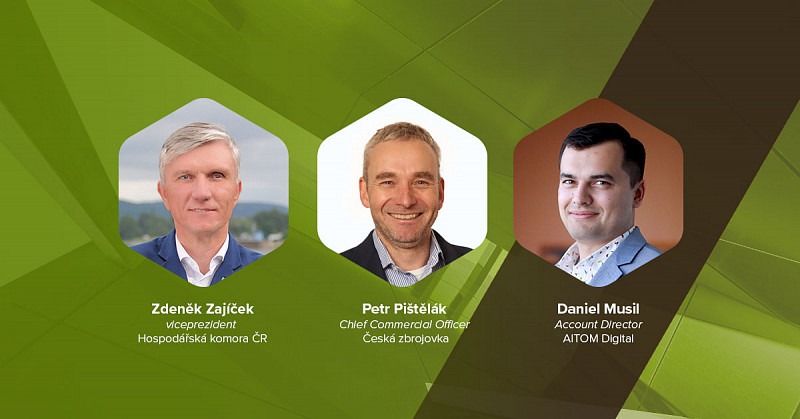
What was the most interesting thing that came up during the webinar?
https://www.youtube.com/watch?v=OdSpdu38DlY
What isn’t immediately apparent
The world is changing dramatically. Even the most conservative companies are now looking at their business differently than they did a year or two ago. Whilst many companies were putting off the transition to online operations before the pandemic, it is now clear to everyone that they cannot avoid it. Everything currently happening around us is only accelerating this process. Even sectors we previously considered “traditionally offline” cannot do without digitalisation, automation and robotisation. Take restaurants, for example. The food and the guests are still the same, but what about behind the scenes? Supplies, stock, orders, HR processes… we’ve long since outgrown relying solely on an Excel spreadsheet and a telephone.
Thanks to technology, we’ll all have a lot less work to do. But one crucial task is emerging – a shift in mindset. A willingness to accept that some of our processes will be handled by a computer and that, as a result, we’ll be able to offer new services we can’t even imagine yet. For both large and small companies, this is a long journey that cannot be skipped simply by purchasing the perfect software.
“Digitalisation must permeate every department,” says Zdeněk Zajíček. According to him, every department needs an IT ambassador who can explain to staff how to navigate digitalisation and motivate them to see new opportunities in it.
I WANT A FREE B2B CONSULTATION
Questions to start with
A successful digital transformation must start with the right questions. For example, you could ask within your company:
-
What do you think about the idea that your work could be made easier or replaced?
-
How could this help us attract new customers?
-
How will people connect to our systems?
-
Are our customers online too?
-
What can we speed up and make more efficient?
-
Do we all need to be physically present in the office, or will working from home suffice in the future?
-
…
These and many other questions will help you create a sound and effective strategy.
The greatest benefits of digital transformation
Digitalisation is a long-term and costly process. It is good to know why you are embarking on it and with what aim. Although the situation differs in every company and sector, the greatest benefits are the same for everyone:
-
You will be more efficient in your business, production and marketing processes. This will save you both time and money.
-
You’ll reach places you couldn’t physically reach. Accessing resources, customers and ideas.
-
You’ll be more accurate. There’s no substitute for the right data.
The biggest launch in Česká zbrojovka’s history
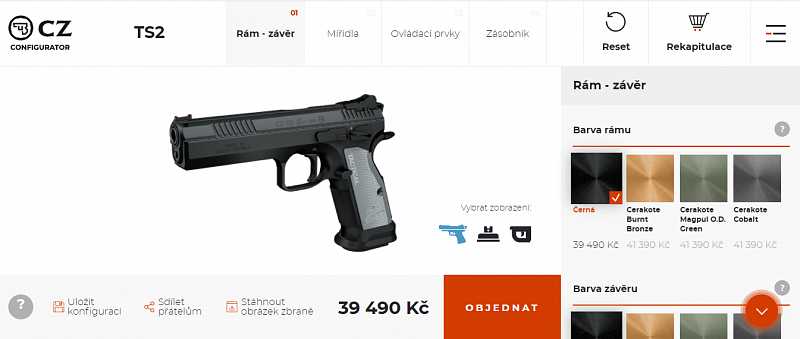
Two years ago, Česká zbrojovka, in collaboration with AITOM, launched the world’s first online personal firearms configurator. In doing so, it achieved a milestone that no one had dared to attempt before. A huge commercial success that began with a good idea and the courage to embark on digitalisation in an area where no one had expected it until then. In the online configurator, you can assemble and send one of 25,000,000 combinations of a personal firearm into production, for example for sport shooters or hunters.
The entire event represented the biggest launch in Česká zbrojovka’s history. Anyone in the world could follow it, and the commercial impact of the event has been hugely successful. This, too, is an example of a successful digital transformation that has worked for a traditional manufacturing company.
Quick-wins: specific examples from AITOM
Process digitalisation is a long-term process that is both organisationally and financially demanding; it cannot be rushed or skipped. What does work, however, is breaking the whole process down into small steps. You can start, for example, with those that deliver quick results.
Example A:
An effective solution for a large organisation with a cumbersome business process:
Current situation:
-
Large organisation
-
Different data formats across partners and departments
-
A lot of manual work – sending emails, Excel spreadsheets and other information
-
High error rate and low efficiency
We proposed a quick-win solution:
-
Creation of a B2B portal
-
Development of a customer section
-
Consolidation of data without partners having to change their systems
-
Unified reporting of business results
Example B:
Digital tools for a B2B company that has so far relied on in-person presentations.
Current situation:
-
Inability to hold trade fairs and exhibitions
-
Inability to train business partners on new products
-
Inability to compete with other manufacturers in retail outlets
We proposed a quick-win solution:
-
Introduction of e-learning
-
Organisation of webinars and online meetings
Example C:
When traditional business processes are no longer enough.
Current situation:
-
Sales staff spend time on ineffective contacts
-
Inaccurate assessment of benefits at customer/business level
We proposed a quick-win solution:
-
Comprehensive integration of sales and marketing data into the CRM
-
Space for recording actions down to the level of specific activities (clicking on an article, visiting a website)
-
Automatic reporting
-
Automated email campaigns
-
Scoring / prioritisation of contacts
I WANT A TAILOR-MADE SOLUTION

Key tool: common sense
“I don’t like digitalisation as a cure-all. I don’t believe it will save us on its own,”
concludes Petr Pištělák. According to him, the most important thing is not to forget that behind the ones and zeros there are always real people who need to use our product for their own benefit or satisfaction. Any new process must make their lives easier, not harder.
He emphasises that everything depends on people, and technology alone won’t help where pen and paper haven’t worked so far. People need to learn to work systematically and think about their work. Then computers become an effective aid.
That’s why it’s important to consider where and how to start with digitalisation in your company. We’d be happy to advise you on this.