
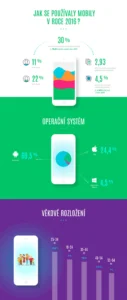
We have compared the results of our 15 largest clients from last year and 2015 and created a clear infographic.
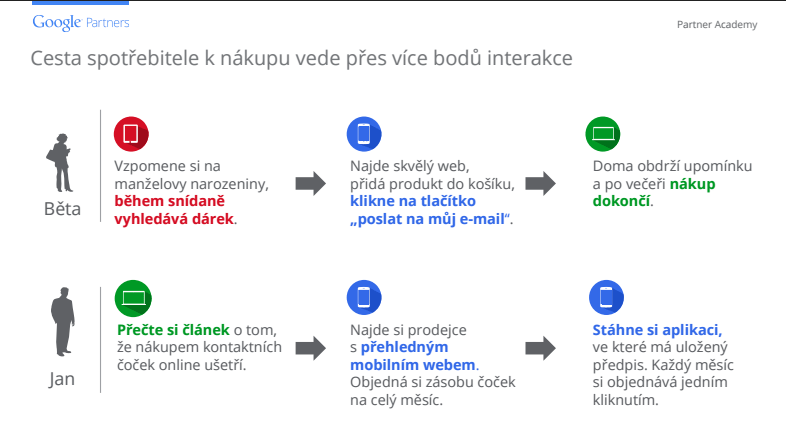
Consumers today think more carefully about their purchases; it’s quite common for them to choose a product on their mobile on their way to work, but only complete the purchase later on a desktop computer. This is, in fact, backed up by Google’s data.

This approach to shopping explains why traffic is very high, but desktop still leads in terms of conversion rates. This is one of the reasons why Google gives responsive websites priority in organic search results.
Some companies claim that switching to a responsive solution makes no sense for them because they target an older demographic. The opposite is true. Users over 55 are using mobiles 120% more than in 2015. The older generation is embracing smartphones; it’s not worth overlooking them.
Mobile search by age
| Age | % increase compared to 2015 |
| 15–24 | 48% |
| 25–34 | 93% |
| 35–44 | 85% |
| 45–54 | 108% |
| 55–64 | 123 |
This data can also be utilised in marketing. The data shows that women are significantly more likely to browse websites on mobile devices. You can target them more effectively through PPC advertising and remarketing.
Check whether your website is optimised for mobile. It is important to have not only a responsive website, but also all apps, calculators and the like. If, for example, the price calculator on a mobile device does not work, you are likely to frustrate users, who will prefer to shop with a competitor where everything works.